A body can be polished, the interior cleaned, and everything under the hood wiped down. For a sale, a car is easy to make look fresh from the car wash. But some details are much harder to hide. They can reveal whether the car was in a crash, survived a flood, or has already been through serious repairs.
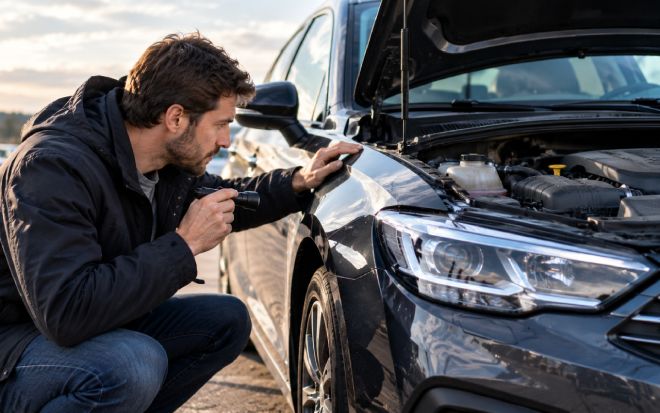
Start with the VIN
Before inspecting the car, check its history by VIN. Depending on the source, you may find records of accidents, mileage, owners, and liens.
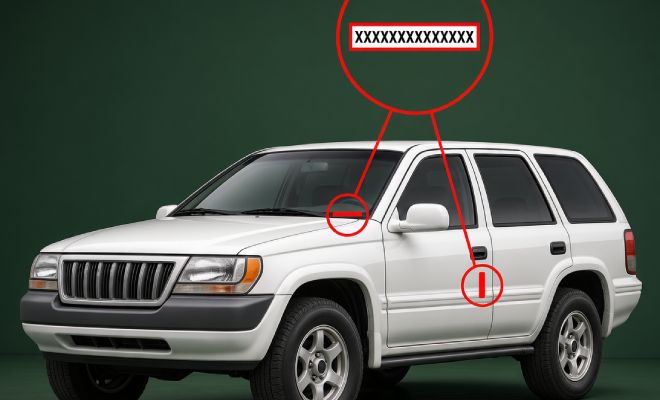
But do not rely on the report alone. If the car was repaired after a minor accident out of pocket, that may not appear in the history. So the VIN gives you a starting point, not a final answer.
Compare the dates
Glass and seat belts carry factory markings that show when each part was made.
A date mismatch by itself is not alarming. The windshield may have cracked from a stone; a belt may have been replaced after the pretensioner fired. What matters is this: if several parts on a car of one model year are noticeably newer than the vehicle itself, it is worth finding out why.
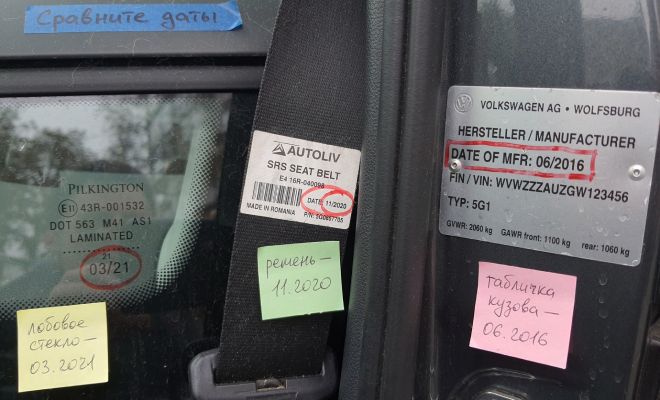
Especially if the new components sit in the same area of the body. Then it makes sense to look more closely for repair traces.
Look for signs of water
A flooded car is trickier. After a good wash it may look fine, and the problems show up later.
Look under carpets and seats, in the trunk, and check metal parts and electrical connectors. A musty smell, dirt or sand traces, oxidized contacts, and corrosion unusual for the car's age all deserve attention.
The U.S. NHTSA warns that flood damage may not appear immediately. Water can harm a car's electrical and mechanical components.
Check the exhaust
Black soot inside the tailpipe is sometimes linked to combustion characteristics or engine faults. But you should not judge engine condition by soot alone.
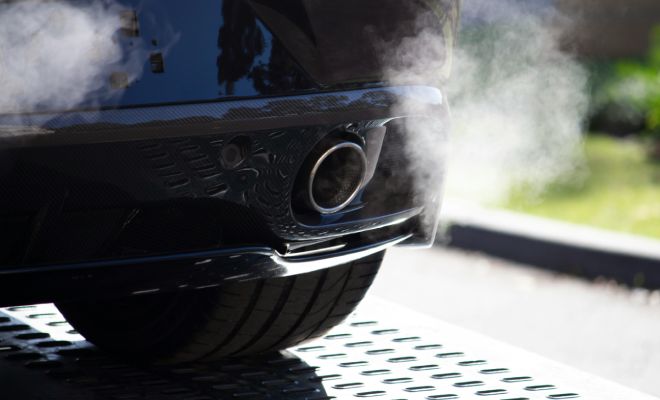
It is far more useful to start the engine and watch the exhaust itself. Persistent unusual smoke, rough running, strange noises, or other symptoms already call for diagnostics.
Now take it for a drive
On a parking lot a car can behave perfectly. Without a short test drive, an inspection is almost pointless.
Over bumps, listen to the suspension; under braking, check whether the car pulls to one side. Watch how the engine revs and how the gearbox behaves.
On a manual, clutch behavior matters most: slipping and jerking quickly turn into expense. On an automatic, watch for jolts, delays, and unusual shifts.
And do not rush back after five minutes. Some problems appear only after the car warms up.
Look at the whole picture
One new belt or a replaced window does not make a car bad. Concern appears when several small things add up.

Odd part dates, body repair traces, corrosion where it should not be, questions about mileage, and suspicious behavior on the road are far more telling than a scratch taken on its own.
So before buying, it is worth showing the car to an independent specialist. A well-prepared car for sale can look flawless. Its history usually leaves traces.