The original Polestar 4 had one detail you could not forget: no rear window. A camera was supposed to replace the view in the mirror, and the car looked more like a design experiment. Now the Swedes have brought the glass back. The new Polestar 4 SUV gets a roomier trunk and roof rails, but keeps the 544-hp version and up to 630 km of range.
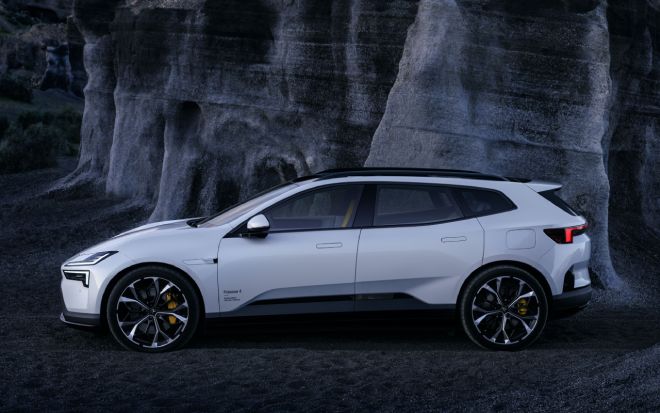
The most interesting changes happened at the back
The front of the car barely changed. The same narrow headlights, familiar silhouette, and minimalist design.
But after the B-pillar, the story is different.
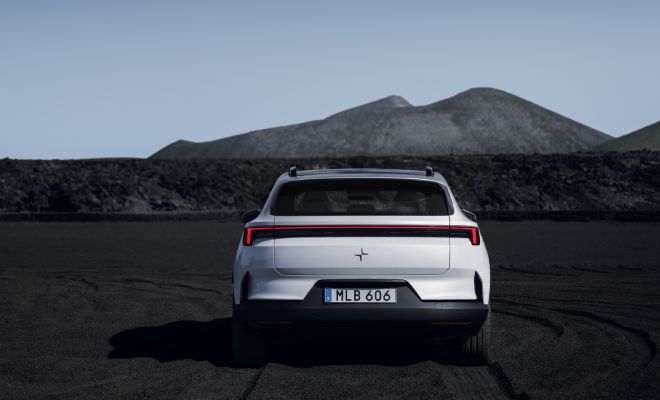
The roof line is straighter, the rear gets a large tailgate, and most importantly, a conventional rear window with a wiper and washer appears. Inside, there is now a traditional rear-view mirror.
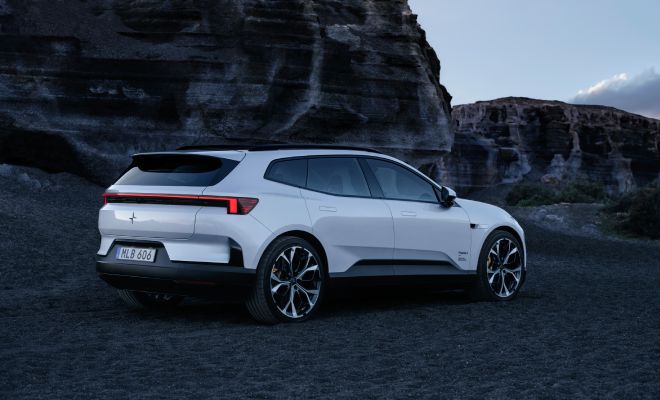
The camera was not discarded, though. The digital mirror remains available as an option. It is a rather amusing twist: first engineers removed the glass to make the car more unusual, and now they offer the driver the chance to look back with their own eyes again.
The look grew calmer, but not duller
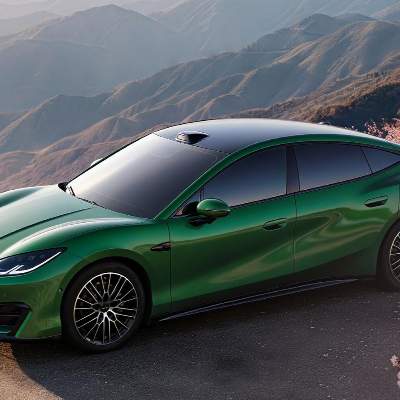
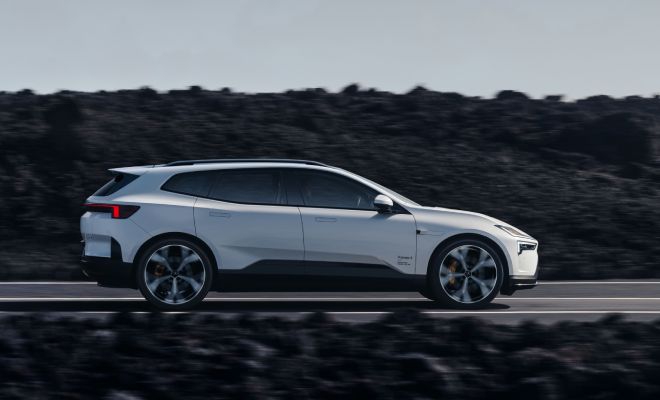
Visually, the Polestar 4 SUV kept the unusual proportions for a crossover. The hood sits low, the roof sweeps back smoothly, and the rear now ends with a more vertical tailgate.
The front stayed almost as restrained: narrow LED headlights, a clean fascia, and Polestar's signature light signature. Door handles sit flush with the body, the sides are smooth, and large wheels nearly fill the arches.
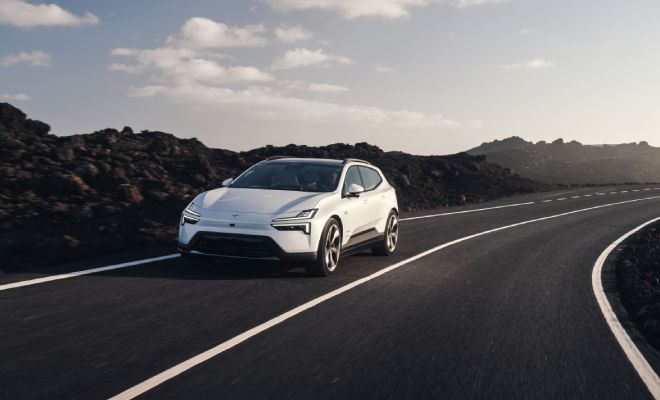
The main change shows up in profile. On the regular Polestar 4, the roofline aims for coupe styling; on the SUV it stays nearly horizontal for longer. So the car reads more like a large shooting brake than a traditional tall crossover.
There is more space
The new rear shape changed more than the looks. Behind the rear seats there are 530 liters, and loaded to the roof the volume grows to 655 liters. With the second row folded, you get 1,665 liters.
Roof rails appeared as well. Maximum load on them is 100 kg while moving and 300 kg when stationary.
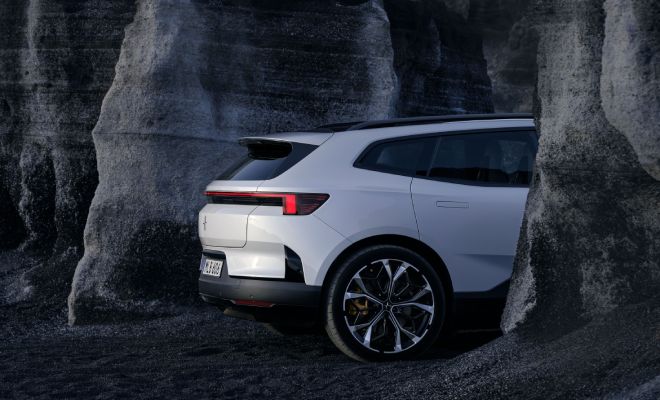
The car itself remains fairly low: 4.84 m long, 1,556 mm tall, with a wheelbase of nearly three meters.
The cabin stayed minimalist
Inside, Polestar did not turn the SUV into a typical family car with dozens of physical buttons.
The driver gets a 10.2-inch display, while the main functions live on a 15.4-inch central screen. The infotainment system runs on Android Automotive with Google services.
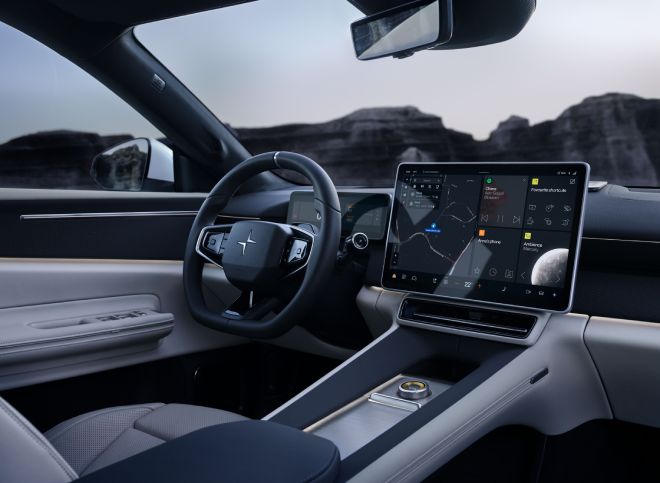
But screen count is not the point. The Polestar 4 cabin feels calm: a horizontal dash, minimal decorative detail, and plenty of open space. The trim uses recycled materials, with options including Tailored Knit and Bridge of Weir leather, including Nappa.
Second-row passengers get a separate 5.7-inch screen for climate and entertainment controls. The panoramic glass roof remains one of the interior's defining features.
The hardware was not compromised
The base Polestar 4 SUV uses a single rear electric motor with 272 hp. It reaches 100 km/h in 7.3 seconds and can cover up to 630 km on the WLTP cycle.
The Dual Motor version has two motors, all-wheel drive, and 544 hp. It hits 100 km/h in 3.9 seconds. Range is quoted at up to 600 km.
Both versions use a 400-volt architecture. Battery capacity is 100 kWh, and maximum DC charging power is 200 kW. Charging from 10% to 80% takes about 30 minutes at a suitable fast station.
For those who want more than the standard setup, there is a Performance Pack. It is available only on the Dual Motor and includes 22-inch forged wheels, Pirelli P Zero tires, Brembo brakes, and ZF active dampers. Power stays the same.
Why did Polestar need to do this at all?
The original Polestar 4 was a fairly radical car. The lack of a rear window allowed an unusual roofline, and the digital mirror became part of that idea.
The new SUV takes a more understandable path. It keeps the recognizable design but makes the rear of the car far more versatile. Glass, a wiper, a large tailgate, and roof rails change the character of the model more than photos might suggest.
At the same time, the key numbers stayed the same: a 100 kWh battery, up to 630 km of range, and 544 hp on the top version.
In the end, the Polestar 4 SUV does not look like a rejection of the original idea, but a more mature version of it. Sometimes that really is enough — bring back one seemingly ordinary thing: the rear window.
Polestar 4 SUV specifications
Dimensions, L/W/H, mm: 4840 × 2139 × 1556
Curb weight, kg: 2265 / 2375
Engine: electric
Power, hp: 272 / 544
0–100 km/h, sec: 7.3 / 3.9
Drive: rear / all-wheel
Energy consumption, kWh/100 km: 17.8 / 19.0–21.6