Installed a camera at the gate and got a tiny blurry figure instead of the courier's face? Good footage depends more on picking the right lens and mounting spot than on buying the most expensive model. We explain why an 8 MP camera can look worse than a cheaper one and which specs actually matter.
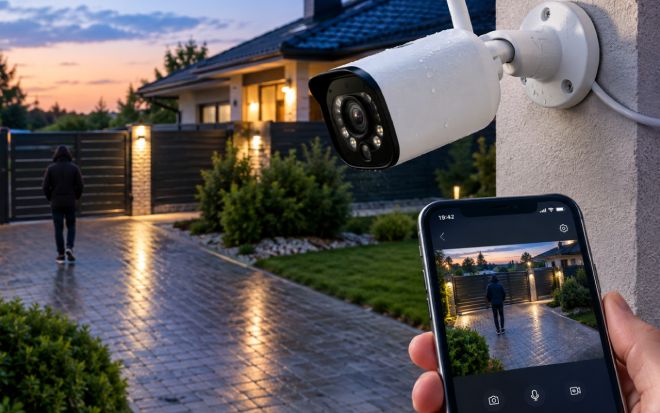
The whole yard in frame, but who is that?
The first mistake is chasing the widest field of view. It seems logical to choose a wider lens so one camera covers the gate, the path, and the whole yard. But the wider the angle, the smaller distant objects appear in the frame.
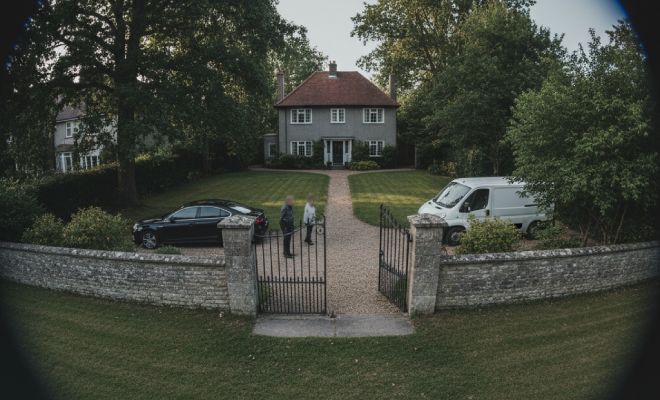
A wide angle works for general monitoring. But if the camera faces a parking spot or the gate, a person's face or a license plate may be too small for reliable recognition.
So choose equipment not by "the more coverage, the better," but by what you actually need to identify at that location.
Megapixels do not guarantee sharpness
4, 5, or 8 MP do matter, but not on their own. Higher resolution adds detail and allows more zoom when reviewing footage. Yet the final image also depends on sensor size and quality, optics, processing algorithms, and lighting.
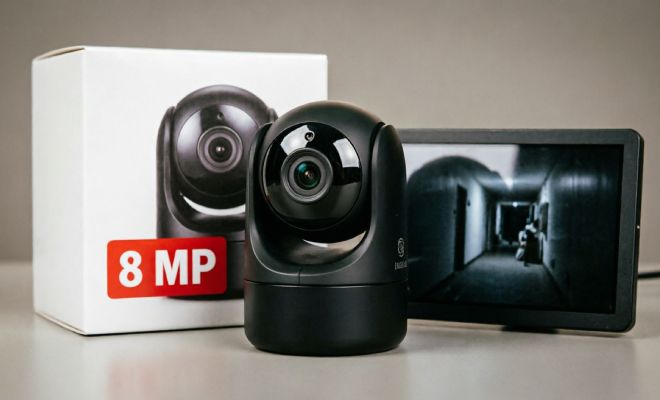
A good 4 MP camera in low light can produce more useful footage than a cheap 8 MP model with mediocre optics. High resolution also increases archive size and storage requirements.
An "8 MP" label on the box is not a reason to assume the camera is automatically better.
At night, cameras show their real class
Most modern cameras shoot fine in daylight. The real difference shows up in the evening and at night.
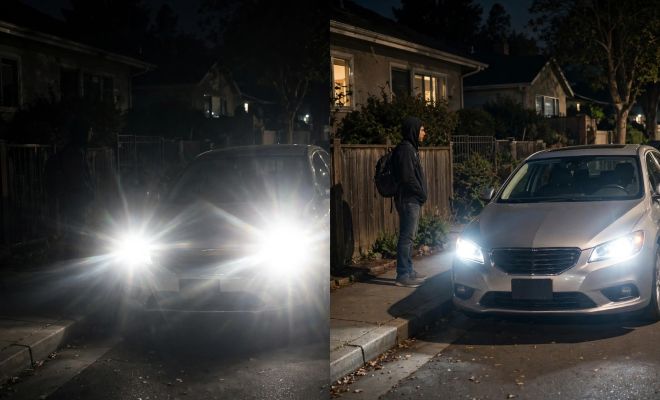
Manufacturer claims of 30 or 50 meters of night illumination do not mean you will make out a face or plate at that distance. Real detail depends on the sensor, lens, lighting, and shooting conditions.
It gets harder when headlights or a bright lamp shine into the lens. WDR — wide dynamic range — helps here. It preserves more detail in both bright and dark areas at once. Without it, a person against a strong light source can turn into a dark silhouette.
Looks and smart home: what the spec sheet skips
When choosing a camera, consider more than image quality. Check whether the model can send alerts to the service you use and whether it works with your smart home or surveillance system.
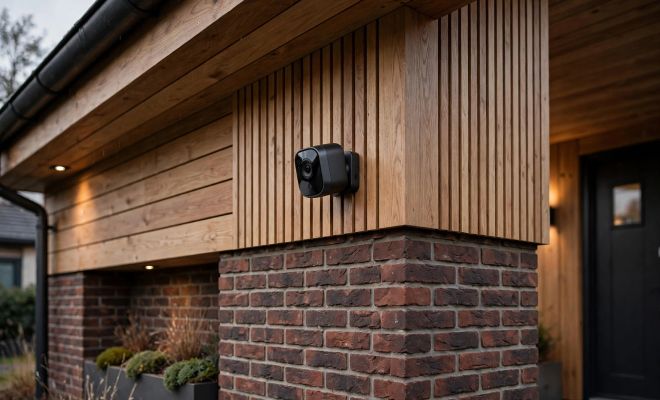
There is also a purely visual question. A huge white plastic camera on a clinker or natural-wood facade can look out of place. Sometimes one quality model in a neat housing looks far better than several cheap units scattered across the wall.
Wi-Fi or cable?
Wi-Fi is convenient when you need one camera where running cable is hard or expensive. With a stable signal, it is a workable option.
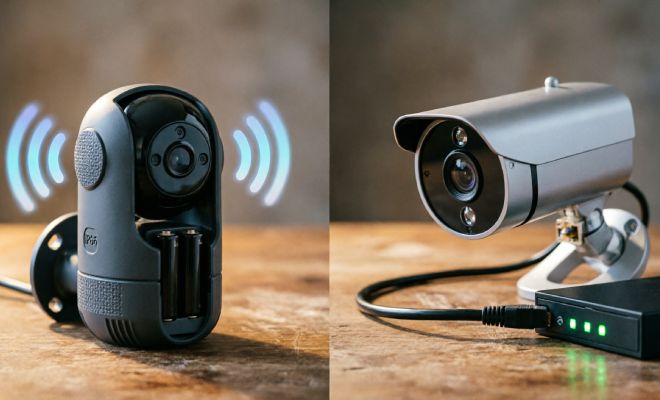
For a permanent system with several outdoor cameras, wired PoE is often chosen. It sends power and data over one Ethernet cable, simplifying installation and making the connection more predictable.
There is no universal rule. Wi-Fi may be ideal for a single camera, while a wired network is often more practical for several fixed outdoor units.
Price does not guarantee quality, but it defines the class
A camera for 5,000 and one for 50,000 rubles can belong to completely different classes. An expensive model may have a better sensor and optics, a tougher housing, advanced analytics, a wider operating temperature range, and extra integration options.
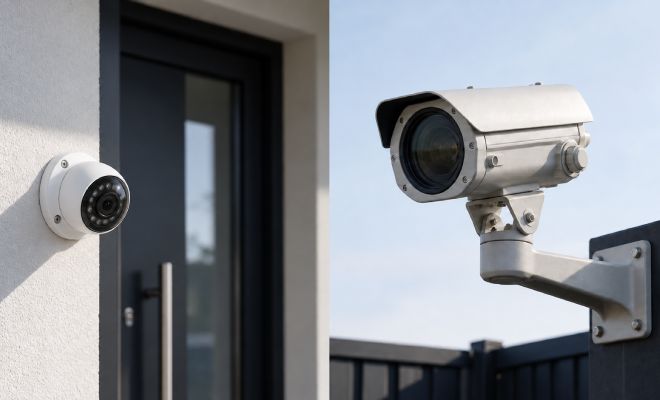
But if the job is simply to show who approached the house, half those features may never be used.
There is no point overpaying for pro capabilities in a home system. But putting the cheapest model in a critical zone where you need to read faces or plates is a mistake too.
Where to start
A good camera does not start with the price tag or megapixel count. First, decide where it will go and what must be visible in the frame.
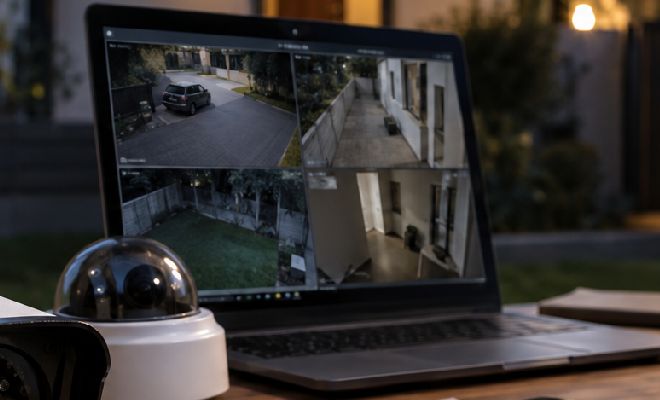
Then pick the field of view, check night performance and WDR, evaluate connectivity and archive storage. Only after that look at extra features and price.
The main rule is simple: an expensive camera will not necessarily show ten times more. It may simply offer capabilities you do not need in your specific case.