Five minutes. That is exactly how long it takes to charge the Formula S from 10% to 70%. BYD's new electric car delivers 657 hp, sprints to 100 km/h in 3.6 seconds, and promises up to 900 km on a single charge. On paper, it all looks too good — especially next to the Porsche Taycan and Xiaomi SU7. We break down what the Formula S can actually do and what remains marketing numbers for now.
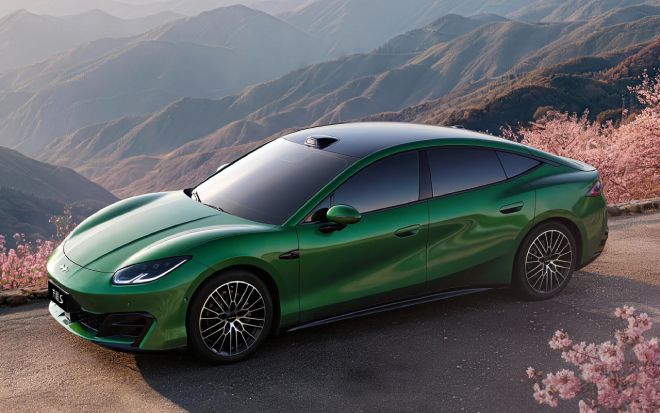
A low silhouette instead of yet another crossover
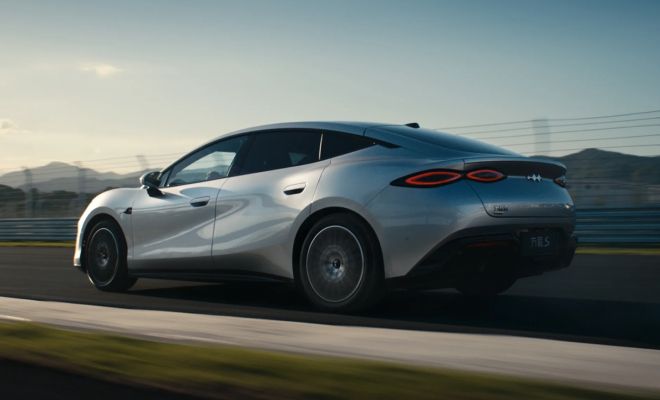
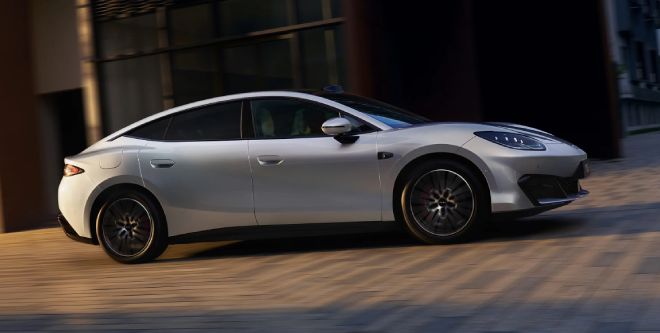
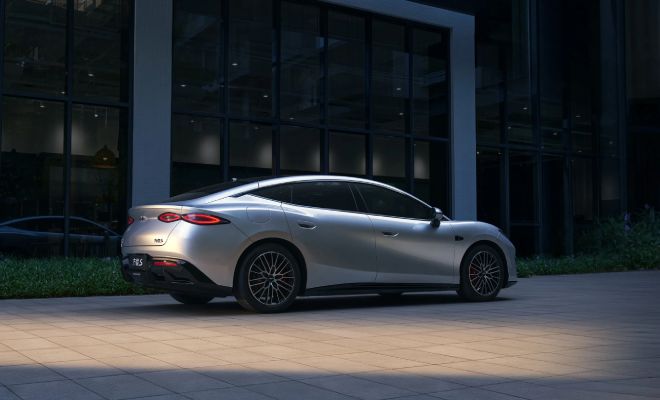
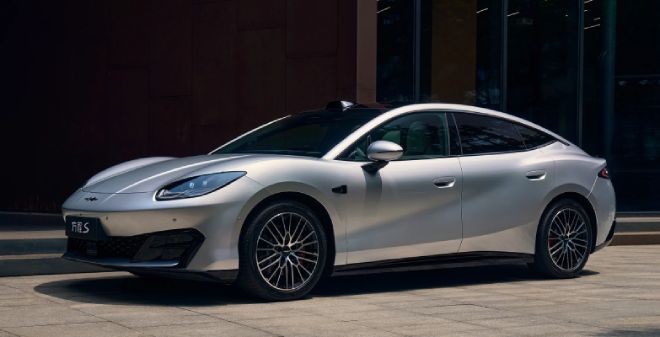
Formula S was created by FangChengBao, a brand within the BYD group. Unlike the SUVs the company is known for, this is a large five-door liftback measuring 5.06 m long.
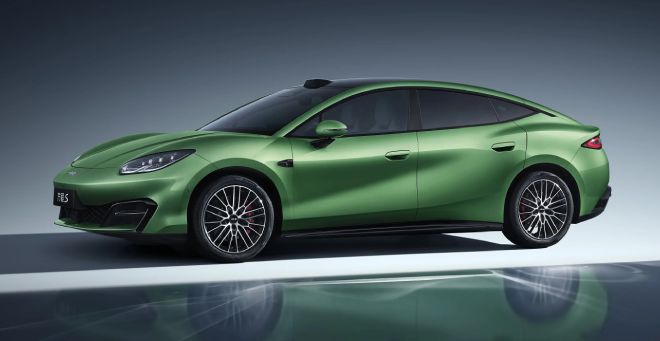
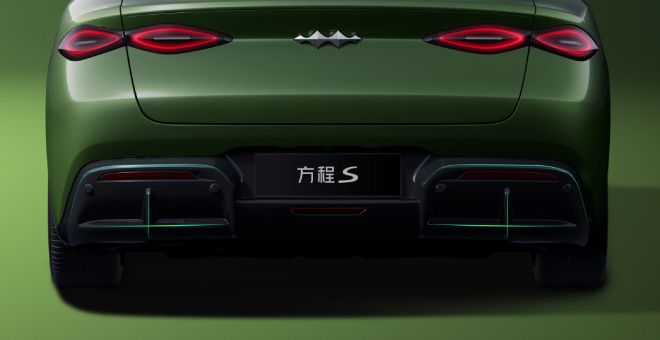
Its proportions recall a sporty grand tourer: a long hood, low roofline, narrow lighting, and a flowing rear end. Yet the body is not purely decorative — the fifth door gives full access to the trunk, and the cabin seats five.
Aerodynamics are serious too: the claimed drag coefficient is 0.22. For a large EV, that helps save energy at high speed.
657 hp is not the main story
Formula S comes in three main power outputs: 329 and 402 hp for rear-wheel-drive versions and 657 hp for all-wheel drive. The top version hits 100 km/h in 3.6 seconds.
Far more interesting is the suspension. Formula S uses the DiSus-M system with magnetorheological dampers whose stiffness electronics can adjust quickly depending on mode and road conditions. Some versions offer pneumatic DiSus-A.
So the car can do more than accelerate hard — it can change character: softer on everyday roads and tighter in corners.
Five minutes that change what an EV means
The Formula S's headline tech is Flash Charging. With it, BYD claims a battery charge from 10% to 70% in about five minutes. From 10% to 97% takes roughly nine minutes.
That is not a full charge from zero in five minutes, of course. But that scenario may matter more than a record range figure: a few minutes at a station is already comparable to a quick stop on a long trip.
Formula S gets second-generation Blade Battery packs of 76.7 or 92.1 kWh. Claimed range is 730–900 km on the CLTC cycle.
That last number needs a caveat: CLTC is more optimistic than real-world use, and EV range drops noticeably in winter.
A cabin with a 26-inch projection
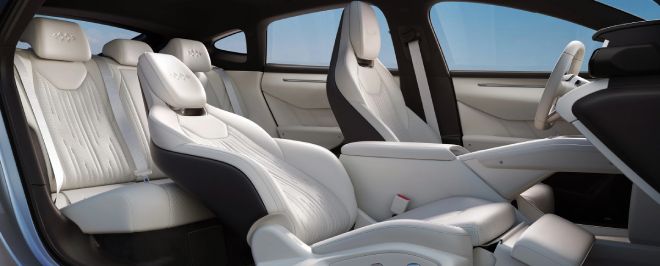
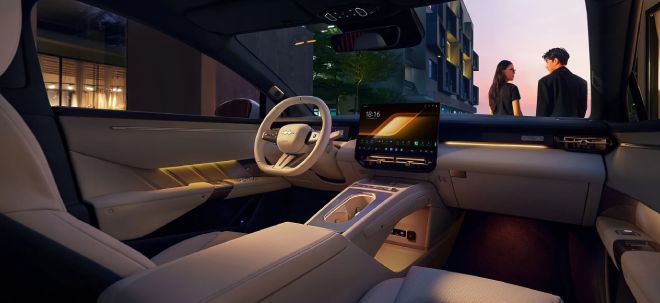
Inside, Formula S also tries to stand apart from ordinary sedans. A 26-inch AR-HUD sits in front of the driver, projecting information into the field of view. The audio system is by Devialet. Front seats offer heating, ventilation, and massage, plus a zero-gravity seating mode.
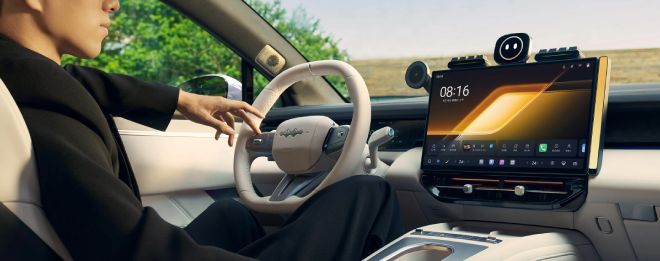
Driver assistance comes from the God's Eye B suite with lidar. It supports assisted driving on urban and highway routes and can park the car automatically. This is advanced driver assistance, not full autonomy: the human still stays in control.
Where the compromises begin
For all its impressive hardware, Formula S is not a light car. Depending on the version, weight is roughly 2.04–2.28 t.
There is also the question of long-term ownership. The car packs complex electronics, adaptive or air suspension, lidar, and a high-power charging system. For a new model, there simply is not enough data yet to judge service costs several years out.
And the claimed 900 km remains a CLTC lab-cycle figure, not a guaranteed real-world trip distance.
Why the Xiaomi SU7 shows up here
Conceptually, Formula S compares most closely to the Xiaomi SU7: both combine high power, a sporty character, advanced electronics, and rich equipment.
But the emphasis differs. Xiaomi bets on its own digital ecosystem, while FangChengBao tries to stand out with suspension, dynamics, and above all charging speed.
The Porsche Taycan is in the conversation too, but it is fairer to talk about approach and class than direct rivalry. Formula S still has to prove itself in real-world use beyond the Chinese market.
What Formula S will cost in Russia
Chinese media quote a starting price of 189,900 yuan (about 2.3 million rubles at current rates). Do not expect that figure in Russian showrooms: it is the bare price before logistics, certification, VAT, and a hefty tax on 657 hp.
Expert estimates put the real sticker for such high-tech EVs in Russia at 6–8 million rubles and up, depending on trim, once fees and dealer markup are included. Official Russian price lists are not set yet.
Specifications
Dimensions, L/W/H, mm: 5060 × 1967 × 1483
Curb weight, kg: 2037–2280
Powertrain: electric, single- or dual-motor versions
Power, hp: 329, 402, or 657
0–100 km/h, sec: 5.8 or 3.6
Drive: rear or all-wheel
Fuel consumption, L/100 km: N/A, electric vehicle
Estimated price in Russia: from 6 to 8+ million rubles (expert estimate)