Some cars get a facelift. Some get a new generation. The new Hyundai Tucson is the case where a familiar name shows up looking as if it just rolled out of a time machine. Hyundai rebuilt the crossover: bigger, more tech-heavy, and visibly bolder outside, without trading practicality for looks. The new Tucson really does stare into the future. What remains is to see what it brought back.
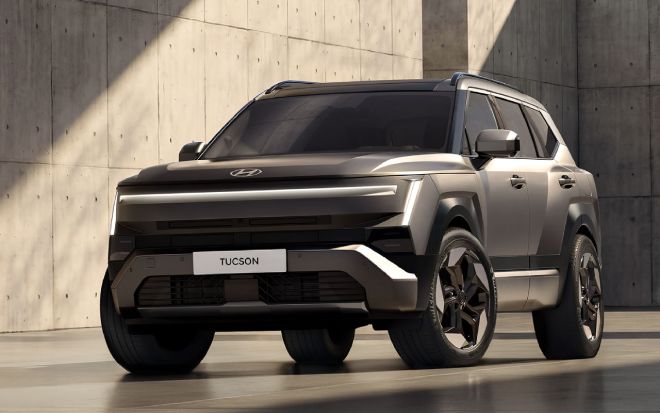
Light became part of the body architecture
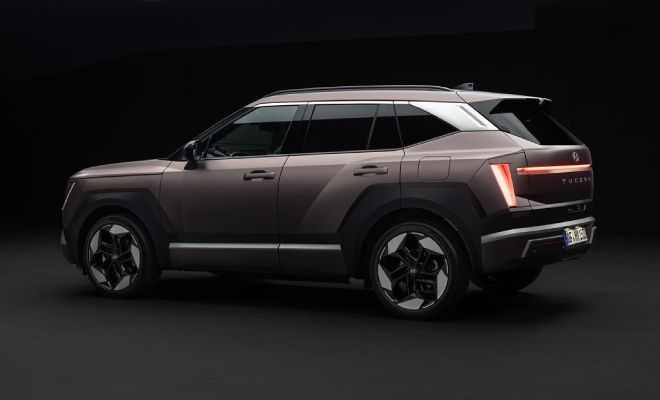
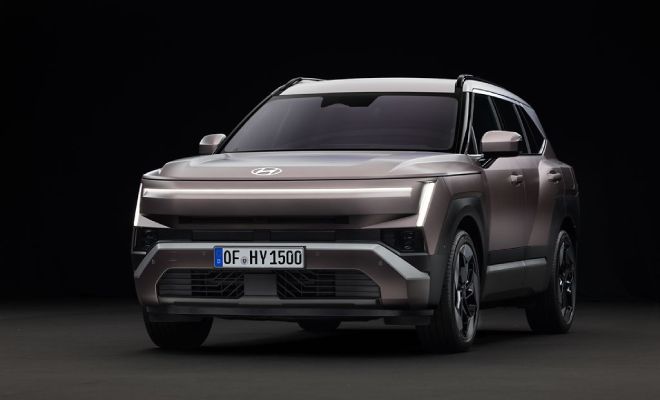
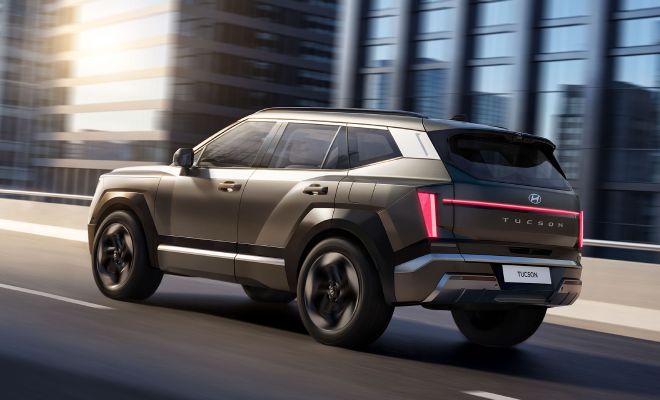
The main change hits before you even start reading individual details. Lighting here stopped being just optics and became one of the car’s main design elements.
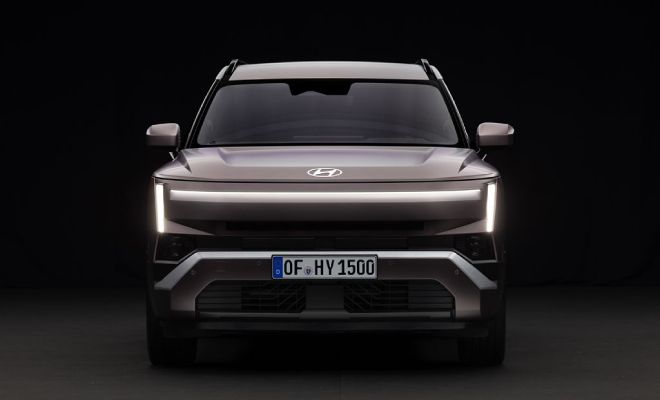
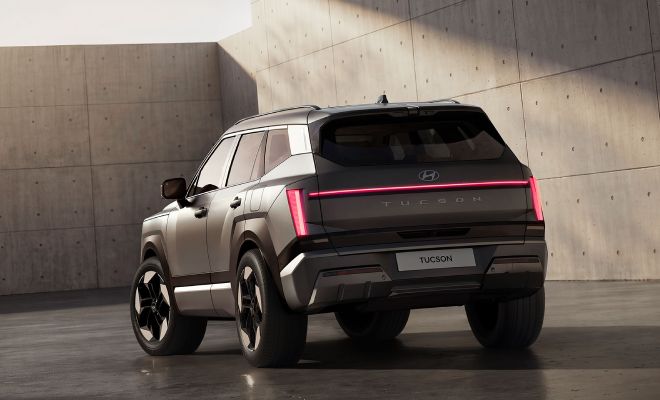
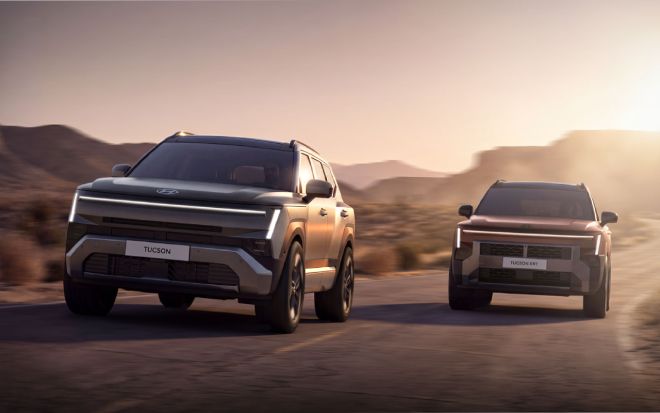
Hyundai used a new H-Edge architecture: central lighting and edge elements join into one composition. The car looks wider, and the usual border between headlights, grille, and trim gets much less obvious.
At the rear the same idea continues with three-dimensional Prism Rear Lamps. Some versions get Micro Pixel Lighting with 25,600 individual LED pixels.
This is no longer a designer simply reshaping a headlight. Light becomes part of the car’s character.
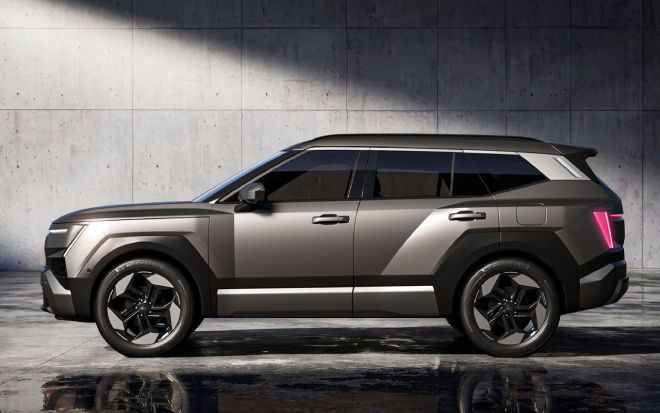
The Tucson also grew. Length reaches 4,560 mm, width 1,900 mm, height 1,670 mm, and the wheelbase 2,720 mm. That is 35 mm more in length and width, 20 mm in height, and 40 mm between the axles.
The cabin is a space, not a cockpit
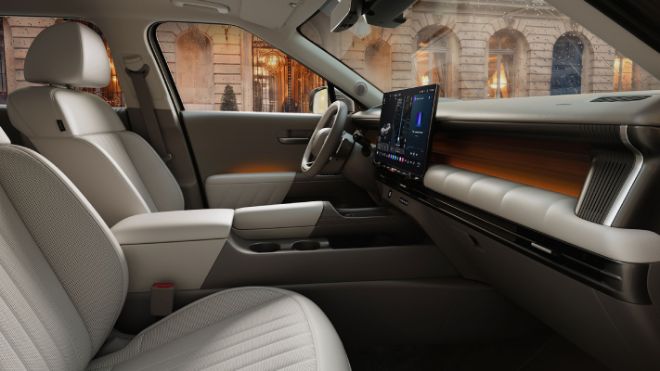
Inside Hyundai took a curious path. Instead of another digital cockpit wrapped around the driver, it bets on Furnished Space: a furnished room on wheels.
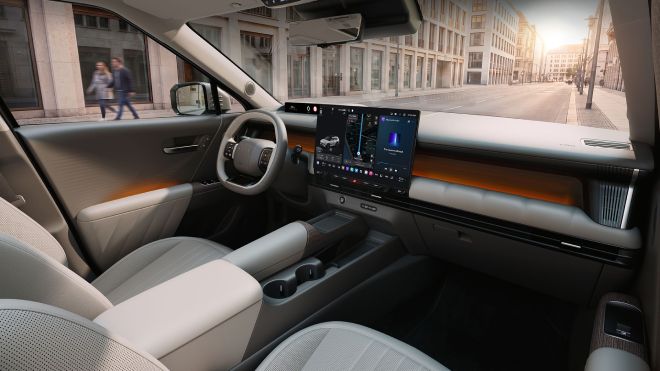
The dash has two levels: a horizontal upper band that lightens the interior, and a deep open shelf underneath for stuff. Soft, volumetric surfaces run from the panel onto the doors and the center armrest.
It feels more like a well-designed modern interior than a computer terminal with seats.
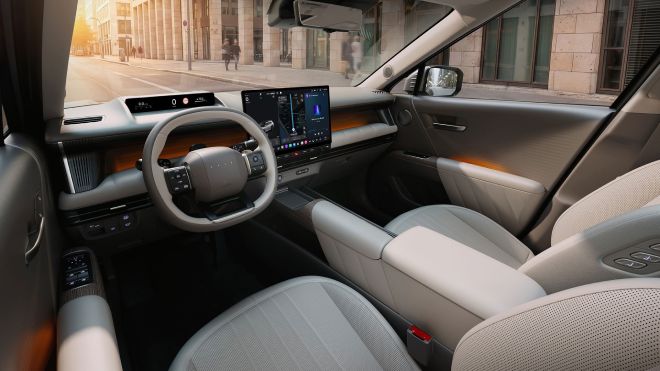
The instrument cluster is a slim 9.9-inch digital screen, and the center Pleos Connect display is 12.9 or 17 inches. There is a head-up display, Qi 2.0 wireless charging, and four 100 W USB-C ports.
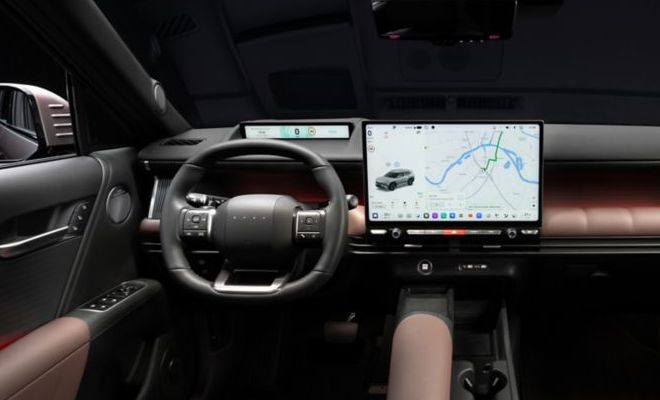
Hyundai kept physical buttons for core functions. The real move is the gear selector on the steering column, freeing space between the front seats.
There is also the Gleo AI voice assistant through Pleos Connect on Android Automotive OS. The car can pull live internet data, and software updates over the air.
The car remembers how it drove in
One of the most interesting Tucson features has nothing to do with screen size.
Memory Reverse Assist can store up to 50 meters of forward travel at up to 30 km/h. In reverse, the system helps replay that path by steering.
In other words, the car can remember how it entered a tight spot and help you leave the same way.
A narrow courtyard, a long garage approach, or a gap between parked cars: situations where that can beat another ambient-light mode.
For all-wheel drive Hyundai also offers Ground View Monitor, showing space around and under the car, plus Remote Smart Parking Assist to park and unpark remotely.
The windshield is technology too
One detail is easy to miss among screens, cameras, and assistants.
An optional windshield gets a multilayer metallized coating. It works as a transparent conductor and can fully defrost the glass in 15 minutes, without the usual heater-wire grid.
In summer the coating reflects up to 60% of solar energy. Hyundai says the cabin can stay about 2 °C cooler, so the A/C works less hard.
More than 20 layers of metal, dielectric, and ceramic sit inside the glass. There is no visible wire mesh in front of your eyes.
This is the kind of engineering that matters more than another decorative feature: useful on a freezing morning or a hot day.
695 liters: the future still has to be practical
Every design leap eventually hits the trunk.
The new Tucson holds up to 695 liters by the European VDA standard. The rear bench splits 40:20:40 and slides 150 mm. Rear legroom reaches 1,002 mm.
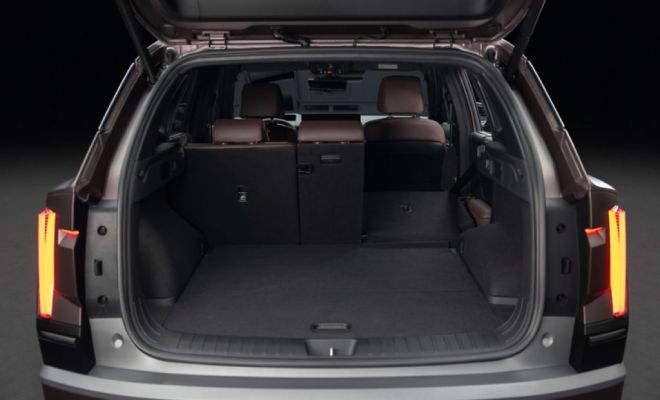
Doors now open to 83 degrees versus 73 on the previous Tucson. Easy to miss on a stage. Useful when you load a child or a big box.
There are umbrella holders, extra cupholders in the rear doors, and an AddGear system for accessories.
A futuristic car that still remembers the umbrella may not sound flashy. It is accurate for real life.
Under the bold body: grounded powertrains
With that look you might expect a full EV. Hyundai stayed pragmatic.
The European range keeps gasoline, a 48-volt mild hybrid, a regular hybrid, and a plug-in hybrid.
The base 1.6-liter T-GDI makes 150 hp and comes with a six-speed manual or a 48-volt system and a seven-speed dual-clutch.
The hybrid makes 245 hp and 380 Nm. The plug-in PHEV reaches 292 hp and the same 380 Nm. Its 17.1 kWh battery claims up to 81 km of electric range on 17-inch wheels. Hyundai says final figures come after homologation.
The AWD PHEV hits 100 km/h in 7.9 seconds. The hybrid can tow up to 1,910 kg: a number that says more about Tucson’s practical side than any slogan.
There is also HEV Stay Mode: at a stop the combustion engine shuts off while climate, audio, and device charging keep running. Almost an EV wait mode without going full electric.
The future here is fairly rational
The new Tucson does look like it stepped slightly ahead. Lighting became body architecture, the cabin turned into a calm space, the car can remember a path, and the windshield got its own tech.
This is not experiment for experiment’s sake.
You still get 695 liters of cargo space, five seats, several powertrains, heavy trailer capacity, and a clear family-crossover layout.
That may be the real point. Hyundai did not invent a future car from scratch. It took a familiar one and swapped familiar solutions for ones that recently felt excessive.
The looks are already from tomorrow. Everything else Hyundai kept grounded enough that the new Tucson feels more convincing than many cars that try too hard to look like the future.