Ferrari has a knack for turning engineering choices into automotive legends. One model made its name with Le Mans wins, another became a symbol of the 1980s, a third brought turbocharging back to a major road-going Ferrari, and a fourth paired a V12 with an electric motor. In nearly 80 years the company from Maranello has built cars that changed how people think about speed, design, and luxury. We gathered 25 Ferraris, each with its own story and a reason to stay memorable even after the numbers on the spec sheet stop surprising anyone.
Where it began: Ferrari from 1947 through the 1960s
1. Ferrari 125 S (1947) — the first step toward a lasting legend
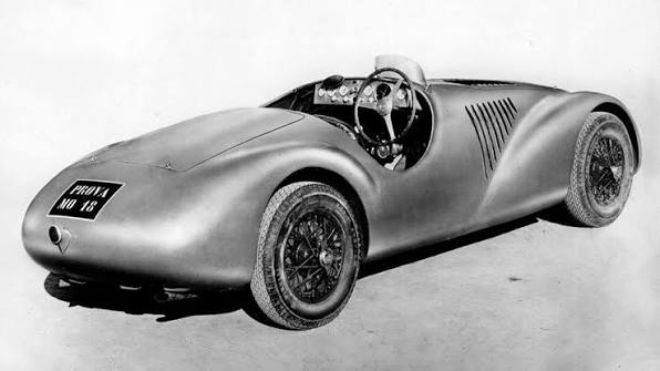
In 1947 Enzo Ferrari put the first racing car on the track under his own name. Its 1.5-liter V12 was designed by Gioacchino Colombo. For a compact sports car, twelve cylinders were an ambitious call: the engineers bet on a small engine that could rev high. On May 25, 1947, Franco Cortese drove the 125 S to victory in the Rome Grand Prix. That is how Ferrari’s racing story as an independent manufacturer began.
2. Ferrari 166 MM (1948) — the road to international fame
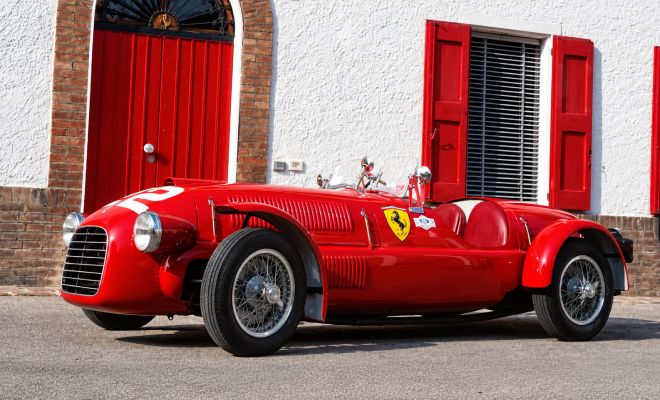
The letters MM point to the Mille Miglia, Italy’s famous endurance race. A light Barchetta body and a two-liter V12 helped the model deliver results a young company could only dream of. It is important not to mix two cars: the May 1948 Mille Miglia was won by a Ferrari 166 Berlinetta, while the 166 MM was shown to the public in September. By 1949 the 166 MM had won the 24 Hours of Le Mans. Those successes made the Ferrari name known far beyond Italy.
3. Ferrari 250 GT California Spider (1957) — a car for the good life
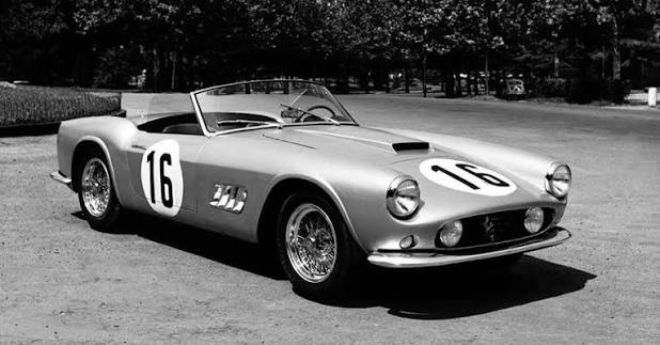
The California Spider was born at the urging of Ferrari’s American dealers, who wanted an open sports car for California’s sunny roads. A long hood, a low silhouette, and a three-liter V12 made it the embodiment of Italian grand touring. Later SWB versions followed, with a shorter wheelbase and chassis tuning to match. The family totaled 106 cars. The California Spider became a favorite of wealthy buyers, but its story was not limited to coastal drives: some examples also raced.
4. Ferrari 250 Testa Rossa (1957) — red heads and big wins
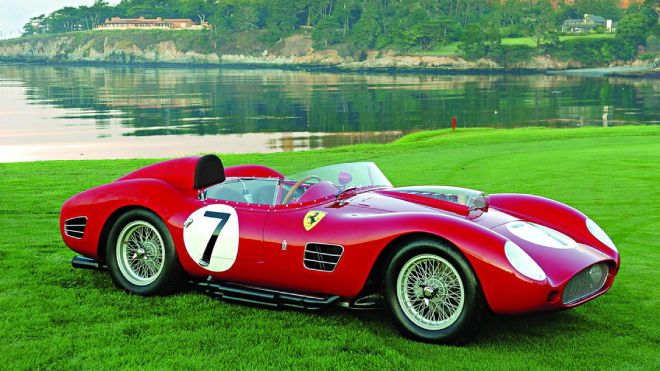
Testa Rossa means “red head”: the name came from cylinder-head covers painted red. The car was built for endurance racing, where reliability matters as much as speed. In different versions the Ferrari 250 Testa Rossa won the 24 Hours of Le Mans three times, in 1958, 1960, and 1961. In 2011 a 1957 example sold at a Gooding & Company auction for $16.39 million. It was not just a rare car, but one with a documented racing history.
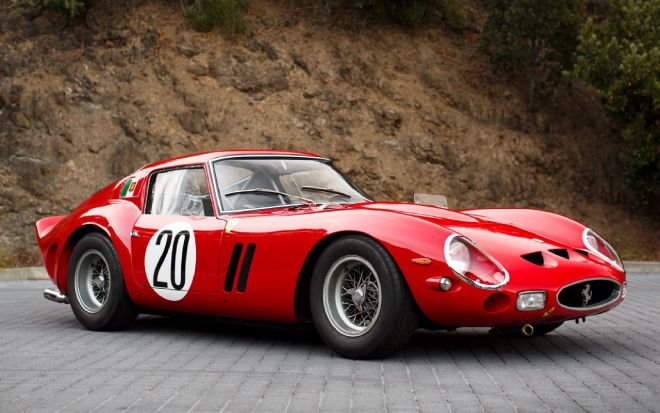
5. Ferrari 250 GTO (1962) — a car worth a chapter of history
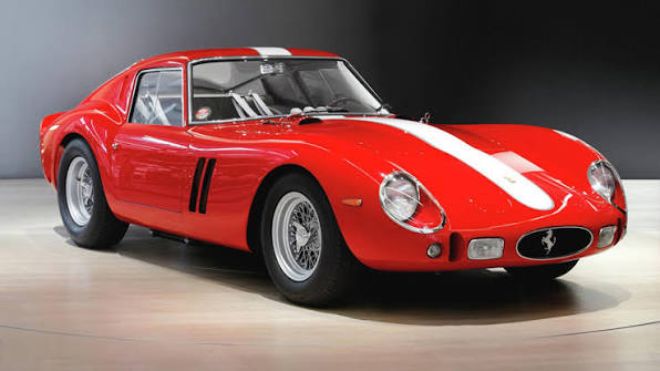
The 250 GTO has nearly every ingredient of an automotive myth: 36 cars in the original series, a three-liter V12 making 300 hp, and wins in the international manufacturers’ championship in the GT class in 1962, 1963, and 1964. Most of all, it was not built for a show-stand pose. The body was shaped with aerodynamics in mind, and engineers kept refining the cars through their racing careers. In 2018 one example sold at RM Sotheby’s for $48.4 million. Today the 250 GTO remains one of the clearest symbols of collector car culture.
6. Ferrari 275 GTB (1964) — a new school of handling
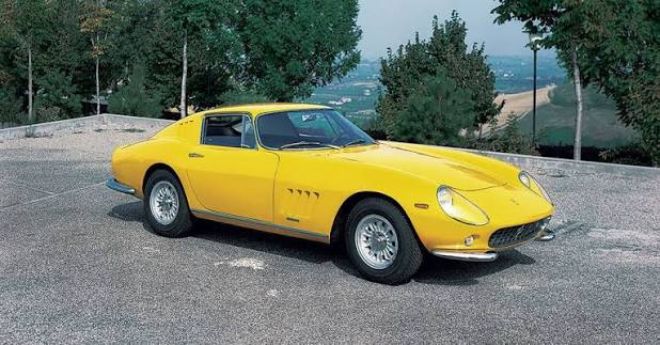
The 275 GTB was an important step for road-going Ferraris. Its 3.3-liter V12 made 280 hp, and a rear-mounted gearbox helped balance mass between the axles. Independent rear suspension also set the model apart from many predecessors. The result was a car that was not only fast in a straight line but more confident through corners. For Ferrari it was a move toward more modern sports-car handling.
7. Ferrari 365 GTB/4 Daytona (1968) — more than 280 km/h without turbos
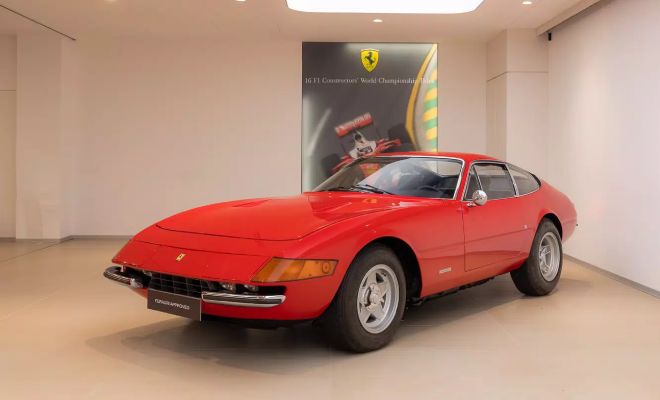
The Daytona nickname stuck after Ferrari’s success in the 24 Hours of Daytona in 1967. The production car arrived in 1968 with a 4.4-liter V12 and a top speed above 280 km/h. While mid-engined supercars were gaining ground, the Daytona kept the classic layout with the engine up front and the gearbox at the rear axle. The long hood and urgent profile became one of Ferrari’s most recognizable late-1960s looks.
Wedge design and cult supercars: the 1970s to the 1990s
8. Dino 308 GT4 (1973) — the Ferrari that broke the style rules
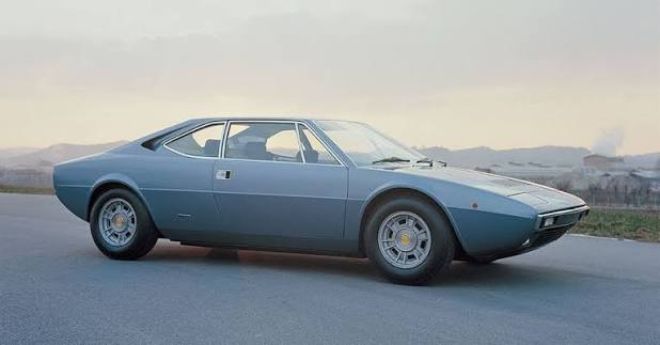
Bertone designed this body at a time when many Ferraris were still linked first to Pininfarina. The angular lines stood in sharp contrast to the rounded shapes that came before. Under the unusual look sat a mid-engine layout, a three-liter V8, and four seats. The model was sold as a Dino, in memory of Alfredo Ferrari, Enzo’s son, who was tied to the development of V6 engines. The 308 GT4 showed that the marque could have more than one design handwriting.
9. Ferrari 512 BB (1976) — twelve cylinders behind the driver
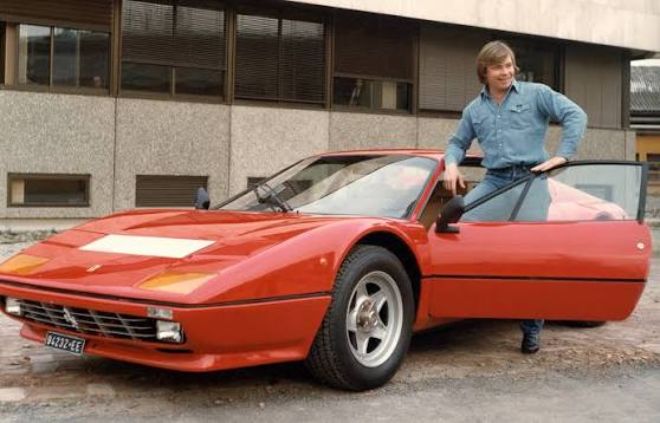
In the 1970s Ferrari pushed the mid-engine layout that had already proved itself in racing. On the 512 BB the engine sat behind the seats, and the body took on a clear wedge silhouette. The flat twelve-cylinder, nearly five liters in capacity, made 360 hp. Compared with classic front-engined coupes it asked for a different driving approach, but it offered another balance of forces and responses at speed. Top speed reached about 302 km/h.
10. Ferrari 308 GTB (1975) — a compact Ferrari with character
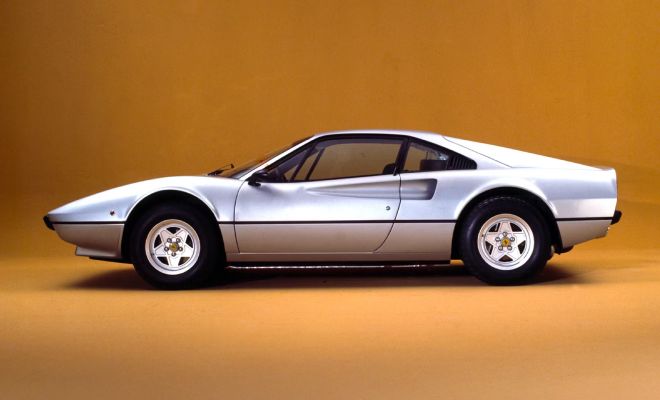
The 308 GTB became one of the marque’s most recognizable models thanks to its mid-engine layout, V8, and proportions that needed no extra decoration. Early cars used a fiberglass body to cut weight, though production later switched to steel panels. The open GTS made the family even more popular. The 308 GTB showed that a vivid sports-car character did not require twelve cylinders or vast dimensions.
11. Ferrari 288 GTO (1984) — a supercar for a race category that never ran
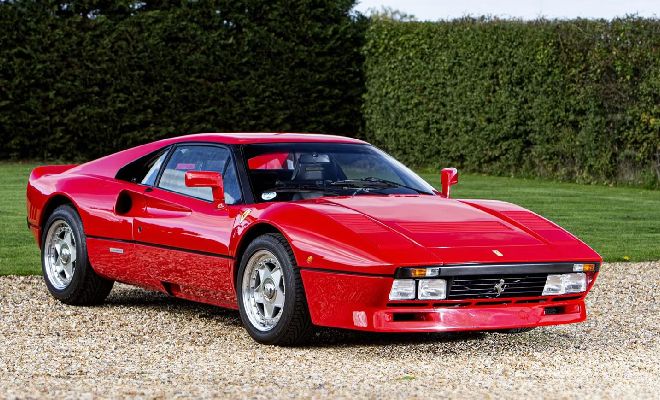
The 288 GTO was built for Group B homologation, a motorsport category that was ultimately canceled. The car still earned a legend of its own. Twin turbochargers helped the 2.9-liter V8 make 400 hp. Light materials, a wide track, and preparation for high loads set it apart from ordinary road coupes. It never raced in the planned category, but it became the first in a line of special Ferraris continued by the F40, F50, Enzo, and LaFerrari.
12. Ferrari Testarossa (1984) — side intakes that defined a decade
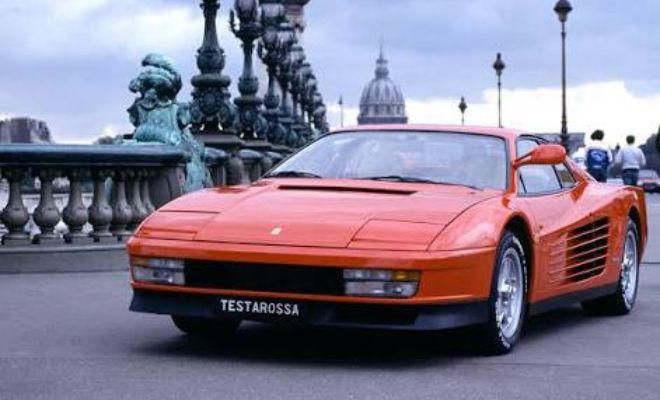
The Testarossa’s wide side intakes were not only a design flourish: they fed air to radiators mounted along the flanks. That arrangement kept the long, low nose and created one of the marque’s most recognizable silhouettes. The engine, a 4.9-liter twelve-cylinder with a 180-degree bank angle, made 390 hp. The Testarossa became a symbol of the automotive 1980s, an era when sports cars tried to look as dramatic as they were fast.
13. Ferrari F40 (1987) — no spare sentiment
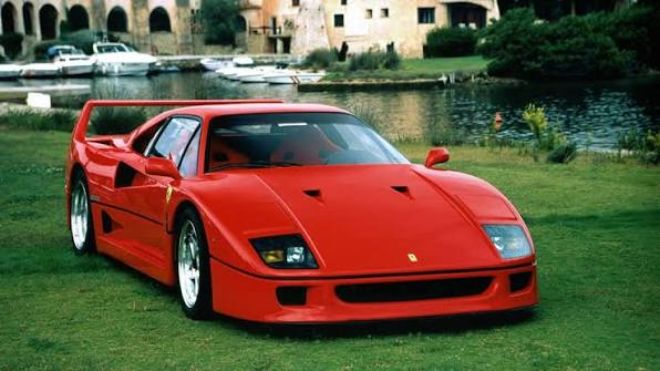
The F40 was built for Ferrari’s 40th anniversary, and Enzo Ferrari personally approved the project. The turbocharged V8 made 478 hp, while a steel-frame body with composite panels helped keep weight down. The cabin skipped familiar luxury cues: little sound insulation, simple trim, and an almost race-car mood. Top speed was 324 km/h, an impressive figure for a late-1980s road car. The idea was simple: the driver should feel speed, not be sealed off from it by a thick layer of comfort.
14. Ferrari 456 GT (1992) — elegance without theatrical effects
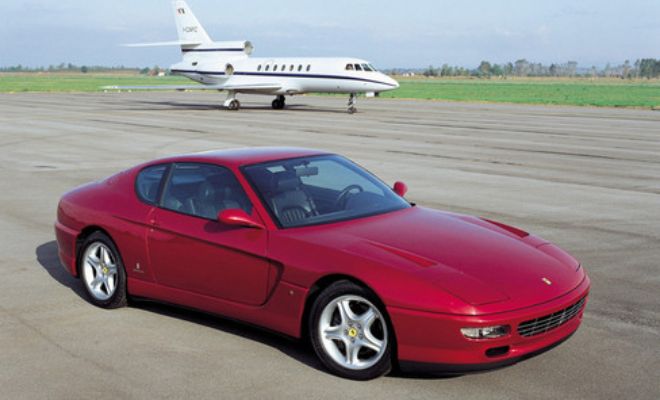
In the early 1990s Ferrari launched a coupe that looked restrained even by grand-touring standards. The front-mounted 5.5-liter V12 made 442 hp, and the cabin offered a 2+2 seating layout. It remained a true Ferrari, able to cover long distances quickly. Pop-up headlights kept the body lines clean: when lowered they did not break the hood’s smooth contour. The 456 GT showed how a sports car could do without aggressively showy design.
15. Ferrari F50 (1995) — racing engineering for the public road
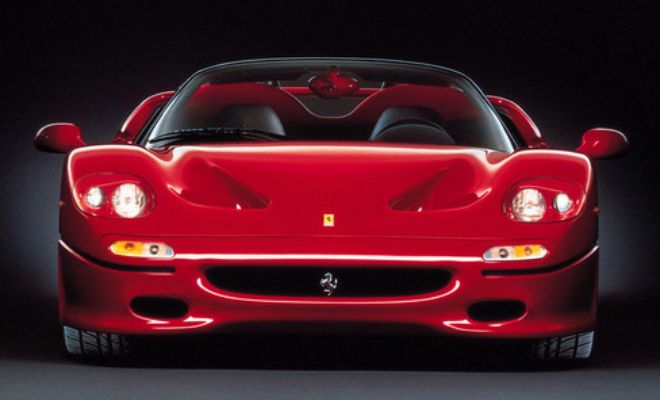
The F50 was built as a road car with technology inspired by Formula 1. Its naturally aspirated 4.7-liter V12 made 520 hp. The engine bolted directly to a carbon-fiber monocoque and acted as a structural member. Suspension with horizontally mounted dampers also reflected a racing approach. A removable targa roof allowed open-air driving, while the absence of ABS and power steering kept the feel more immediate. Only 349 examples were built.
From naturally aspirated V12s to hybrid hypercars: 1996–2025
16. Ferrari 550 Maranello (1996) — the return of a classic layout
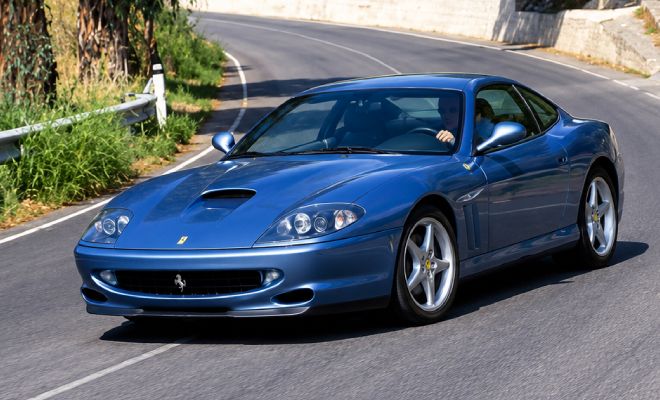
After an era of mid-engined flagships, Ferrari brought a classic layout back to a major road model: a front V12 and rear-wheel drive. On the 550 Maranello the 5.5-liter engine made 485 hp, and a six-speed manual let the driver shape the character of each acceleration run. Top speed reached 320 km/h. The model was a reminder that a fast car does not have to look like a spaceship: a long hood and classic proportions can deliver outstanding sensations too.
17. Ferrari Enzo (2002) — technology from the racing team
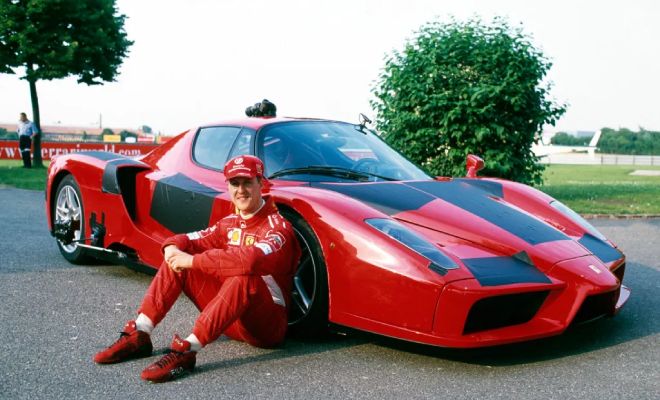
The Enzo was named for the company’s founder. Its naturally aspirated six-liter V12 made 660 hp, while carbon-fiber body elements and carbon-ceramic brakes reflected early-21st-century racing hardware. A robotized gearbox shifted with paddles behind the wheel. The Enzo became one of the clearest examples of racing solutions transferred to a road car: the technology worked not only on the engine but on braking, aerodynamics, and handling. The main series totaled 399 cars; one more example was later built for a charity auction.
18. Ferrari 458 Italia (2009) — farewell to the naturally aspirated V8
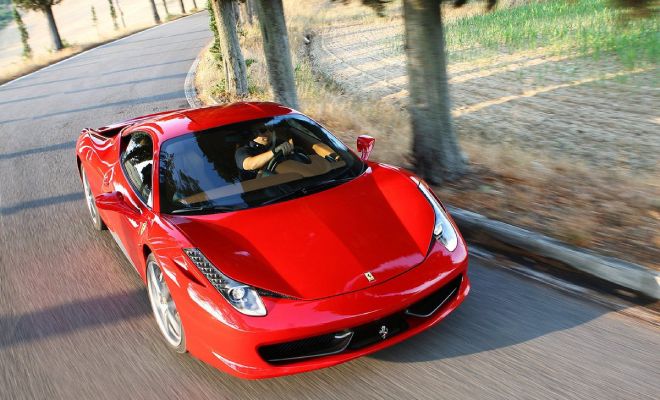
The 458 Italia had a naturally aspirated V8 making 570 hp and able to rev to 9,000 rpm. In an era when turbocharging was returning, the model became a benchmark for a high-revving engine without turbos. Its aerodynamics included movable elements that changed airflow at speed. The lasting impression, though, came from the engine itself: it climbed the rev range eagerly, and the sound became part of the car’s character. That is why the 458 Italia is still especially prized by fans of naturally aspirated Ferraris.
19. Ferrari FF (2011) — four seats and all-wheel drive
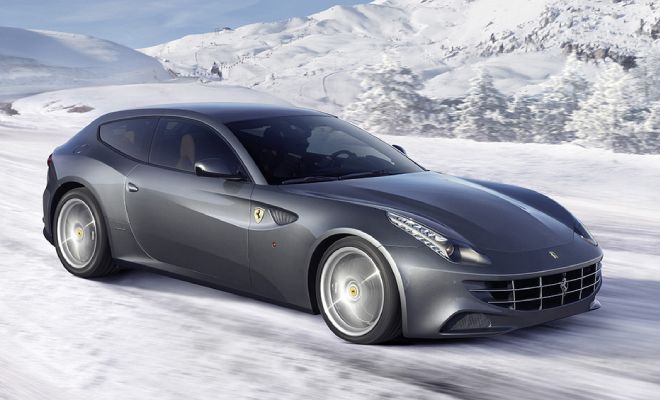
FF stands for Ferrari Four: four seats and all-wheel drive. Under the hood sat a naturally aspirated 6.3-liter V12 making 660 hp. The all-wheel-drive system was unusual for the marque: a special Power Transfer Unit sent drive to the front wheels when needed, while the main load stayed on the rear axle. As a result the FF could pull away more confidently on slippery surfaces without losing its sporting character. It is one of the most practical Ferraris, but calling it a compromise in dynamics would be a stretch.
20. LaFerrari (2013) — a hybrid not built for thrift
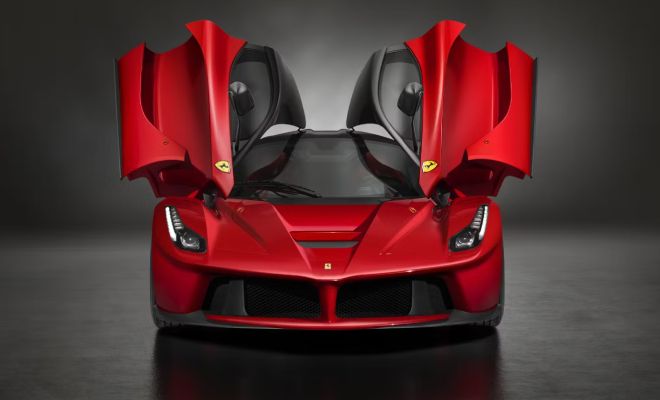
The name LaFerrari literally means “the Ferrari.” The flagship combined an 800 hp naturally aspirated V12 with an electric motor that raised combined output to 963 hp. The HY-KERS system used energy-recovery principles familiar from racing programs. Unlike an ordinary hybrid, electrification here served performance first. LaFerrari marked a turning point: the electric side stopped being a compromise and became a tool for speed.
21. Ferrari 488 GTB (2015) — the turbo returns
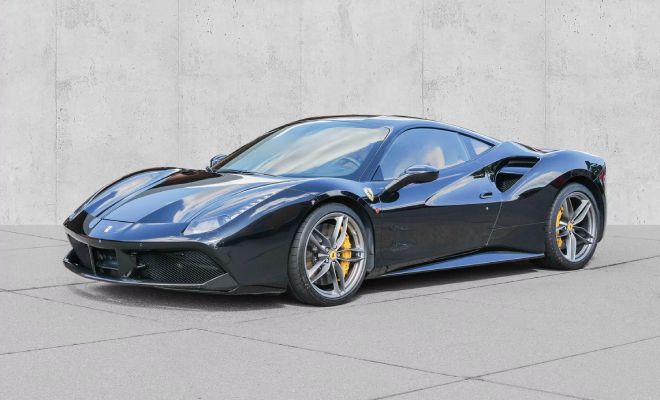
After the naturally aspirated 458 Italia, the 488 GTB received a twin-turbo 3.9-liter V8 making 670 hp. Boost raised torque and sharpened acceleration, but it also demanded precise throttle response. Engineers worked to cut lag and keep the familiar Ferrari feel. Compact turbochargers and careful powertrain tuning helped make the throttle reaction more immediate. The result was a supercar that combined strong midrange pull with high performance on a race track.
22. Ferrari SF90 Stradale (2019) — a thousand horsepower from a hybrid system
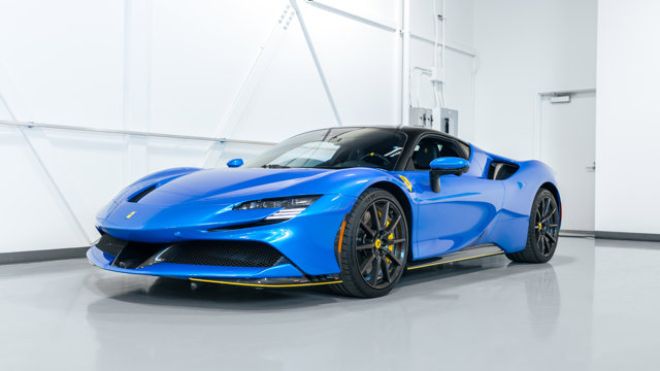
The SF90 Stradale takes its name from the 90th anniversary of the Scuderia Ferrari racing team. Its powertrain combines a twin-turbo V8 with three electric motors for a total of 1,000 hp. Two electric motors drive the front wheels, providing all-wheel drive and finer control of traction. The SF90 became Ferrari’s first series-production plug-in hybrid. Electricity here helps the car move quietly when needed and accelerate more effectively out of corners.
23. Ferrari 296 GTB (2021) — a V6 that needs no apology
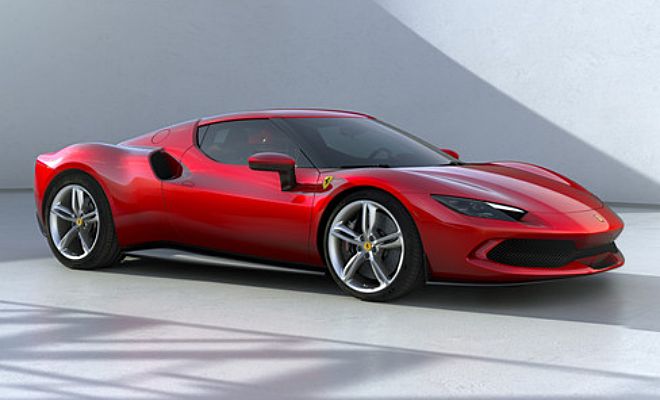
The 296 GTB has six cylinders instead of the V8 or V12 familiar in flagship Ferraris, but that is no reason to treat it as lesser in ambition. The new 120-degree V6 works with an electric motor for a combined 830 hp. Turbochargers sit inside the cylinder banks, helping keep the powertrain compact. The 296 GTB is rear-wheel drive and showed that hybrid technology can unlock a relatively small engine’s potential without losing sporting character.
24. Ferrari F80 (2024) — 1,200 hp and only 799 examples
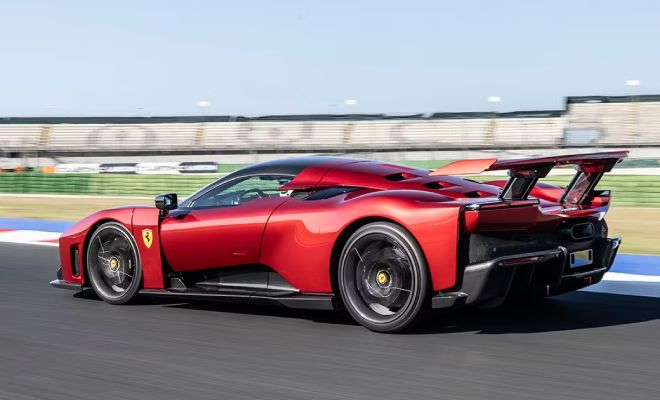
The F80 continues the line of special Ferraris that began with the 288 GTO and F40. Its hybrid powertrain combines a twin-turbo V6 with electric motors for a total of 1,200 hp. Production is limited to 799 cars. Unlike classic Ferraris where the engine was often the star, the F80 shows a whole system at work: aerodynamics, electric drive, electronics, and the power unit. It is not merely a powerful motor in a handsome body, but a set of solutions built for speed on the track.
25. Ferrari 849 Testarossa (2025) — a cult name in a new era
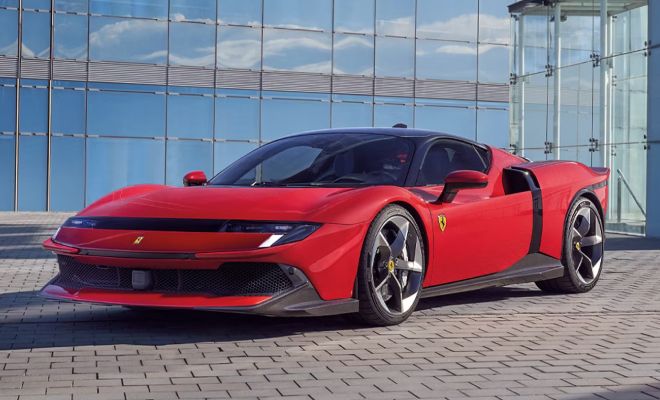
In September 2025 Ferrari brought back the Testarossa name, but under it sits a very different car. The 849 Testarossa uses a plug-in hybrid system with a twin-turbo V8 and three electric motors. Combined output reaches 1,050 hp, and all-wheel drive helps put the torque down. The new model succeeds the SF90 Stradale. Reviving a 1980s name is not an attempt to repeat the past, but a way to join a recognizable history with modern technology.
Ferrari is not content to live in the past
From the 125 S to the 849 Testarossa, nearly eight decades have passed. In that time Ferrari swapped dozens of engines, mastered new materials, moved from mechanical solutions to complex electronics, and made the hybrid powertrain part of its sporting philosophy.
The most memorable models share a trait: they did not merely become more powerful than what came before. The 250 GTO brought GT championship wins, the F40 made minimalism part of supercar philosophy, the FF offered an all-wheel-drive concept unusual for the marque, and LaFerrari turned the hybrid system into a performance tool.