Mercedes just rolled out a new electric AMG crossover meant to prove sportiness does not need a gas engine. On paper it hits hard: three motors, more than a thousand horsepower, and roughly 2.5 seconds to 60 mph. Still, the loudest argument is not the stopwatch. Some say Mercedes finally found a shape that fits its new design language. Others call the body overworked and roll their eyes at fake V8 theater replacing a real exhaust note.
A look that split the press
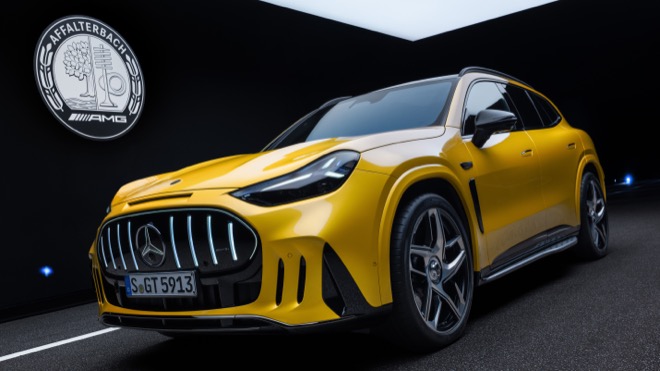
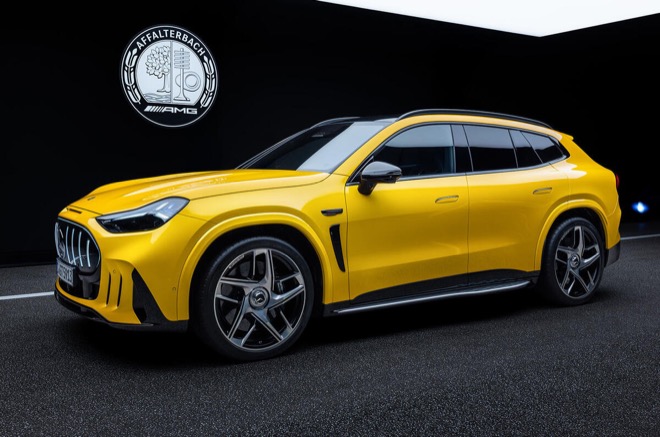
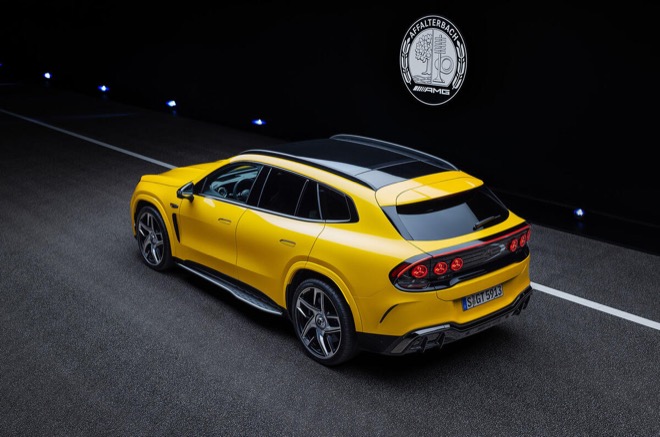
The AMG GT SUV looks like the designers refused to leave any surface alone. A massive front end, a grille with vertical blades, busy lighting, and unusual taillights turn the crossover into a billboard for the new AMG philosophy. It is dramatic. It is also divisive.
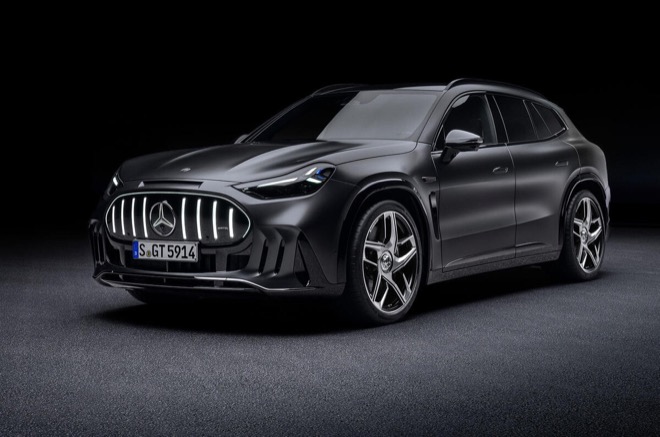
Top Gear argues the taller body helps. The design reads more balanced than the related four-door GT, and the nose feels less crowded. Autoblog pushes back on the decorative overload and the urge to shout performance from every crease. Edmunds notes the same gamble: for some buyers the face is the reason to sign; for others it is the reason to walk.
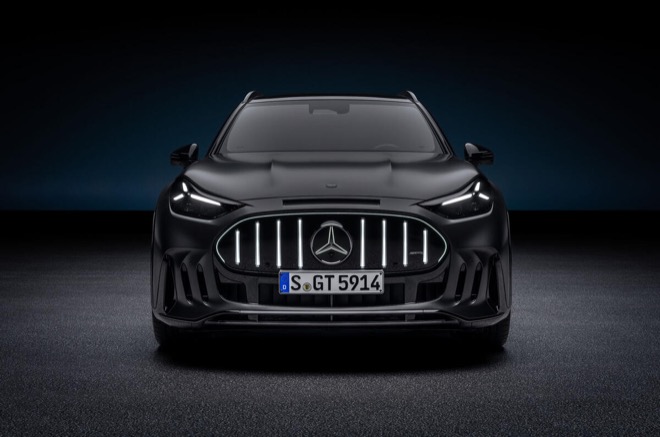
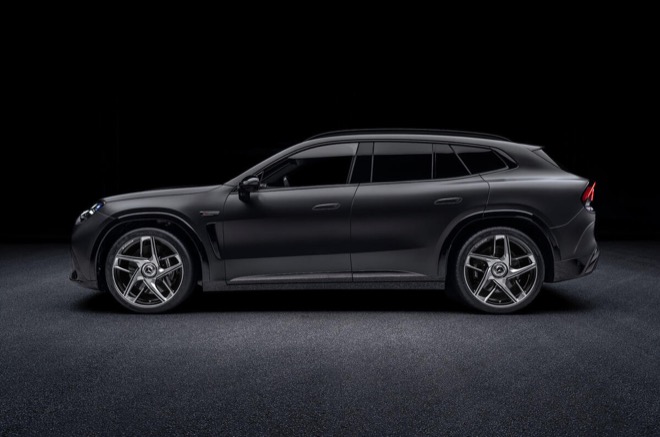
This SUV is not trying to please everyone. The open question is where bold design ends and visual excess begins.
More than 1,000 hp, with a catch
Hardware is where Mercedes answers the skeptics. The top GT 63 uses three electric motors and peaks at about 1,169 hp. Mercedes quotes around 2.5 seconds to 60 mph and a top speed near 168 mph.
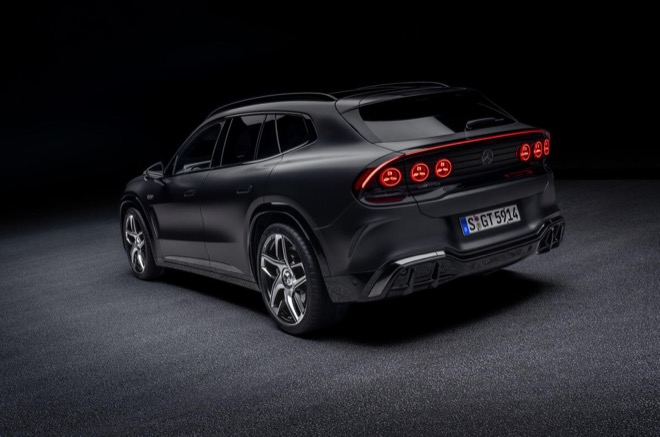
There are cooler versions too: a dual-motor GT 53 around 544 hp and a triple-motor GT 55 around 816 hp. AMG also packed torque vectoring, a rear-axle steering setup, and Active Ride Control+ hydraulic dampers that fight body roll and pitch under hard launches and braking.
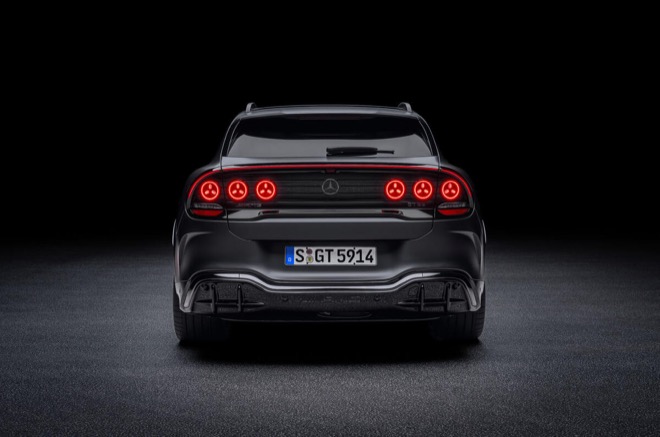
The engineering brief is clear: make a tall, heavy EV feel like a proper sports machine. Straight-line power is easy. Sharp handling with this mass is the real exam.
Battery packs stretch to about 128 kWh. Mercedes talks roughly 435 miles of WLTP range on the longest setup, with peak charging up to 710 kW and a claim of about 280 miles of range back in roughly ten minutes when the station and battery cooperate. Real-world EPA numbers and charge curves will decide how useful that is in the US.
Weight is the other asterisk. Depending on spec, the SUV can approach about 6,000 lb. Fine for a family hauler. Brutal for something selling itself as a sports car. Even 1,169 hp does not repeal physics.
Electric AMG tries to fake the V8
The most interesting chapter starts after the spec sheet. AMG fans buy more than acceleration. Engine note, shift drama, and vibration were part of the brand. An EV has none of that by default.
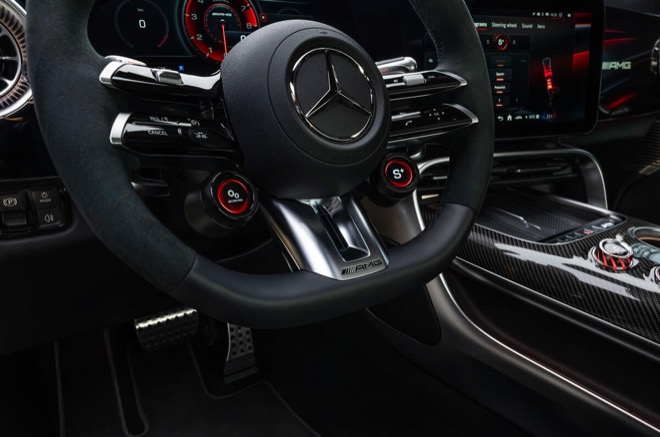
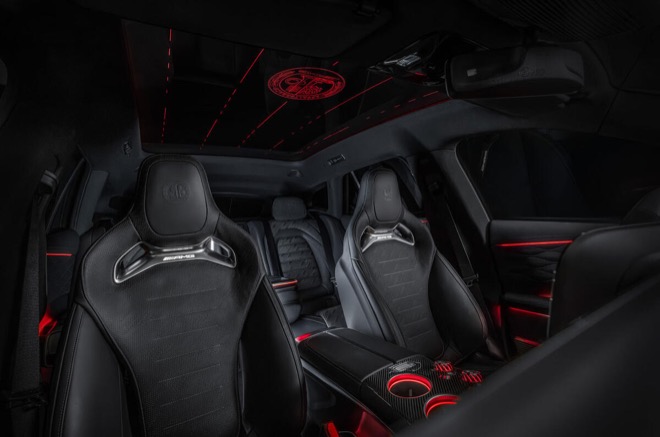
So engineers built a theater system: synthetic engine sound, simulated gearshifts, and seat vibration that lean on gasoline AMG muscle, including V8 cues, depending on drive mode. Whether speakers can restore the emotion of a real sports car is still an open bet. The attempt alone shows how hard it is for performance brands to go electric without losing their identity.
Can Mercedes sell the idea?
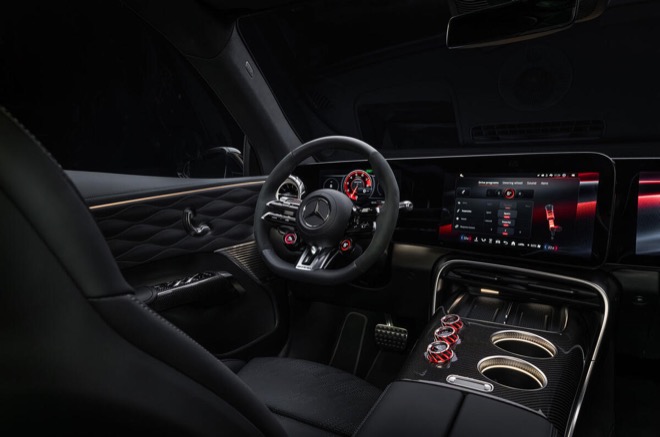
For all the aggression outside, the GT SUV is still a five-seat daily. Sport seats, rich materials, MB.OS infotainment, usable rear space, about 21 cu ft of cargo, plus a frunk under the hood.
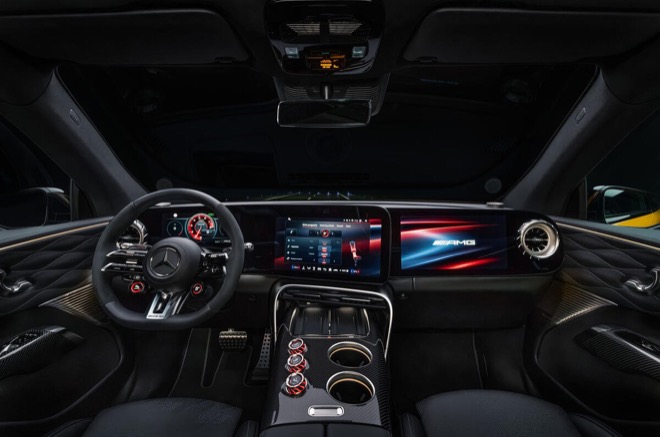
That is the pitch: supercar pace without coupe compromises. Commute, road trip, haul the family, keep the thrust that used to belong to exotic two-doors. The obvious rival is a hot electric Porsche Cayenne. Both brands are betting a heavy EV SUV can still feel sporty. Mercedes is stacking extreme power, active suspension, and headline charging numbers.
Official US pricing is not out yet. Trade estimates land roughly in the $110,000 to $220,000 band depending on trim, with first arrivals expected in the first half of 2027. One thing is already settled: nobody is indifferent. Which way the verdict swings will take time.
Layout (GT 63): 3 electric motors, AWD
Power: up to 1,169 hp
Acceleration: 0–60 mph in about 2.5 s
Top speed: about 168 mph
Battery: up to 128 kWh
Range: up to ~435 miles (WLTP)
Charging: up to 710 kW
Weight: up to ~6,000 lb