A car spring is a favorite material for garage makers: high-carbon leaf-spring steel holds an edge well and is highly resilient. One blacksmith showed in detail on video how to forge a real long sword from such a spring.
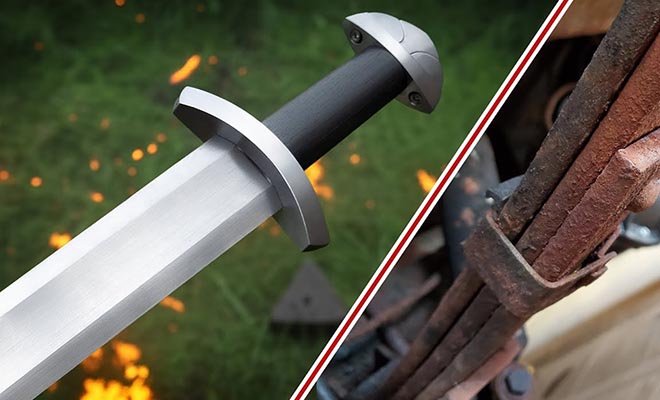
The secret of Celtic weaponsmiths
For straight forging, a spring is too narrow. Spreading it into a wide blade without losing thickness is physically impossible. The blacksmith borrowed a solution from Iron Age masters. Quality steel was scarce then, so they used a clever trick: wrapping a strip of hard steel around a soft, tough iron core. The blade came out sharp at the edges and flexible in the center.
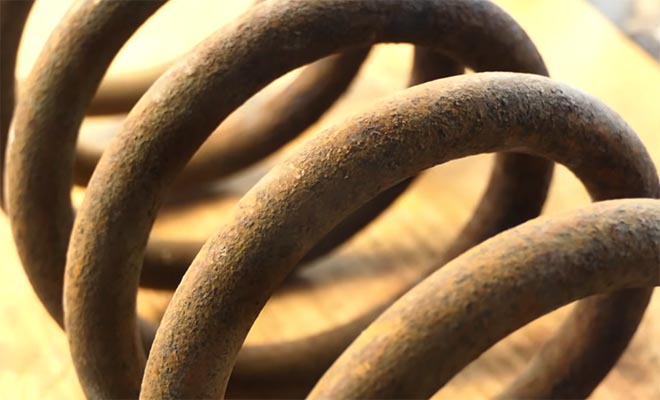
For the soft core, the maker used a piece of an old wagon-wheel rim of wrought iron. That metal holds natural slag inclusions that, when etched, leave a unique surface pattern.
The straightened spring, heated in the forge, became the outer "jacket" of the sword, and the wagon iron became its strong foundation.
Fire, press, and welding
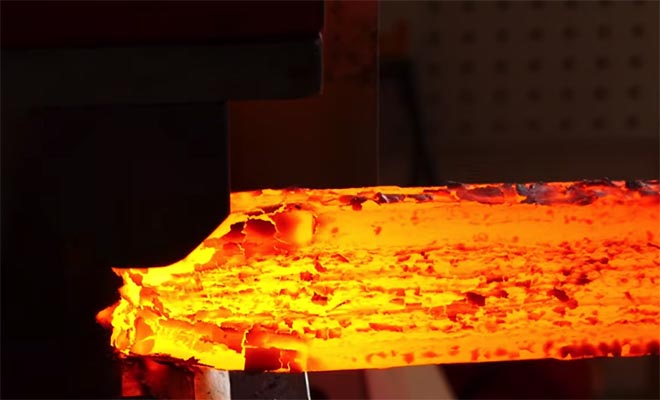
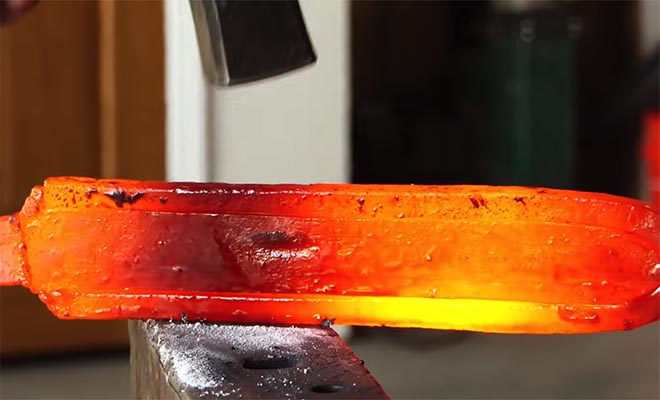
Forge-welding different metals is one of the riskiest steps. Under hammer blows, the steel shell tends to slip off the core. A hydraulic press and spot tacks held the blanks in place.
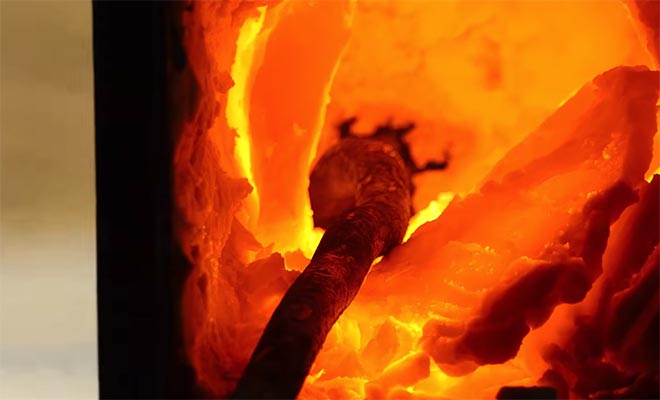
When the tip still delaminated during forging, the smith used a classic forge fix: cutting out the damaged section with a V-notch and rewelding the point.
After forging, the blade went to the grinder. To keep the sword light and balanced, the maker ground a distal taper (blade thickness decreasing smoothly from the handle toward the tip). After finishing, the blade weighed only 380 grams.
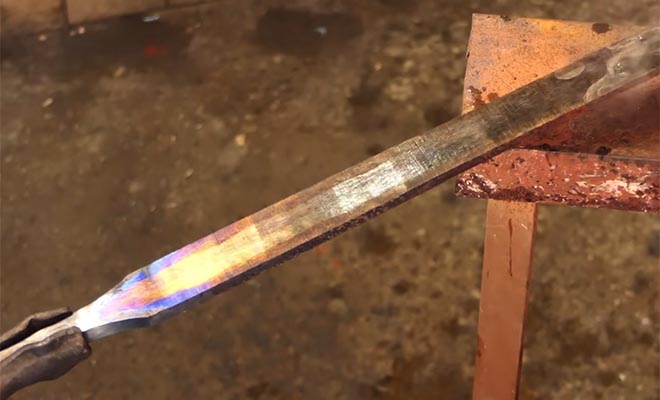
After hardening and tempering, the blade was dipped in ferric chloride: the dark spring steel along the edge sharply set off the light patterned wrought-iron core.
An anthropomorphic hilt of bronze and wenge
For the sword's fittings, a rare design from the 3rd century BCE was chosen.
- Wax modeling and casting: Guard and pommel parts were carved from jewelry wax. Bronze pieces were cast from those models by the lost-wax method.
- Textured wood: The grip used exotic wenge. To make the wood look like an artifact pulled from a riverbed, it was worked with a rough steel brush: soft fibers crumbled away and left deep relief.
The complex experiment produced a full, razor-sharp Celtic short sword. A car spring that lost its original shape found a new life as a weapon with modern steel strength and the look of ancient history.