Some of these motorcycles make more than 300 horsepower and accelerate like supercars. Others have such unusual layouts that most makers would never green-light them. A few look more like sci-fi props than machines for real roads.
And these are not show concepts or one-offs. They exist as production bikes or limited runs, and they blur what two-wheeled transport can be, from extreme power to radical engineering.
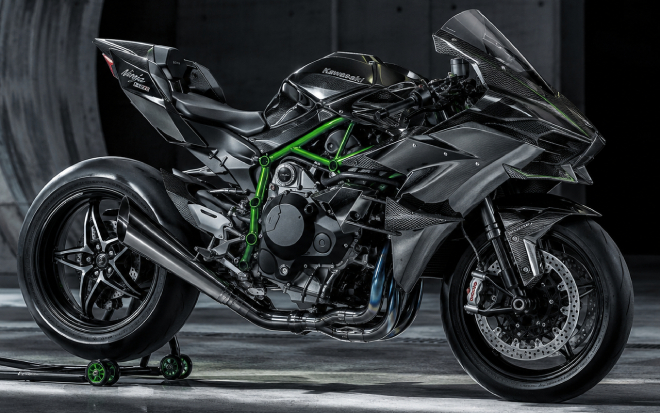
Kawasaki Ninja H2R
The H2R does not look like something that belongs in a production lineup. It feels more like an engineering experiment that somehow was never stopped.
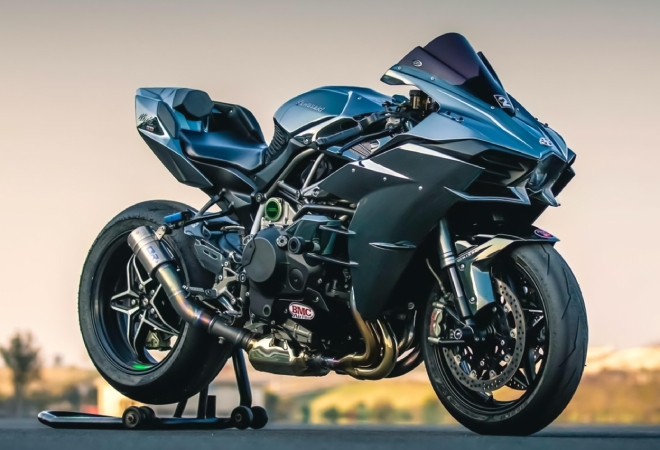
Everything serves one number: power. The supercharged four-cylinder makes more than 300 horsepower. That is enough to end any debate about fast bikes before it starts.
It has no business on the street, and it does not go there. The H2R is one of those rare projects built not for compromise, but to test the limits of what is possible.
Bimota Tesi H2
The first thing that breaks the usual logic is the missing front fork.
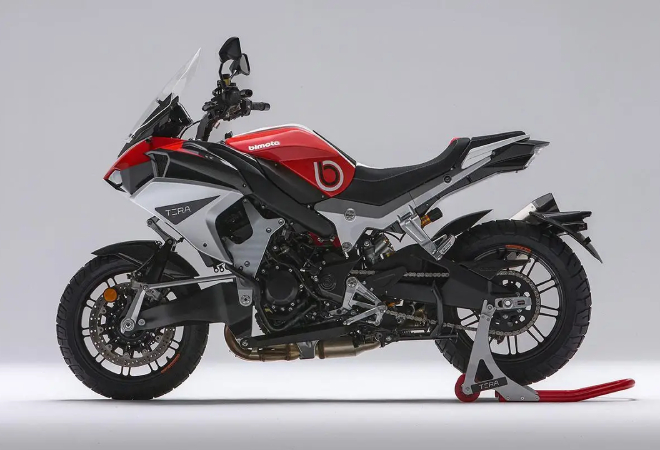
In its place is a hub-center steering system with levers. From the outside it looks like complexity for the sake of engineering theater. In motion the layout explains itself, especially under braking and acceleration when load shifts.
All of that is paired with Kawasaki's supercharged engine. The combination simply does not fit the usual motorcycle template.
Lotus C-01
It is easier to see the C-01 as an object that somehow got an engine than as everyday transport.
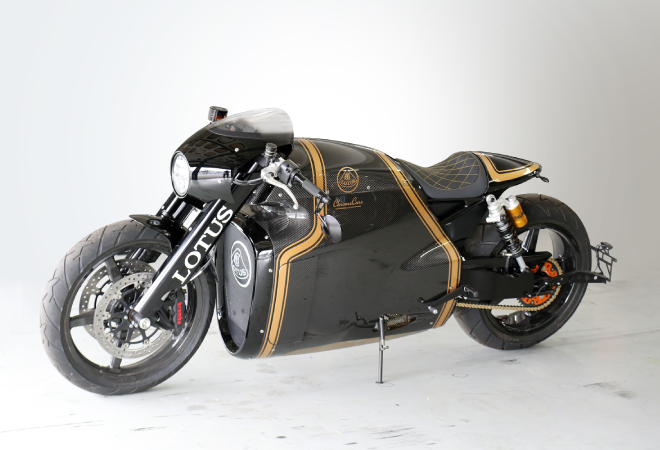
Daniel Simon's shape leaves almost no accidental lines. Everything is stretched, enclosed, and locked into one geometry, closer to aviation than to classic bike design.
A 1,195 cc V-twin and a run of about a hundred bikes sealed its status as a rare experiment that never got a sequel.
Aston Martin AMB 001 Pro
This is one of those cases where the badge sets expectations more than the class.
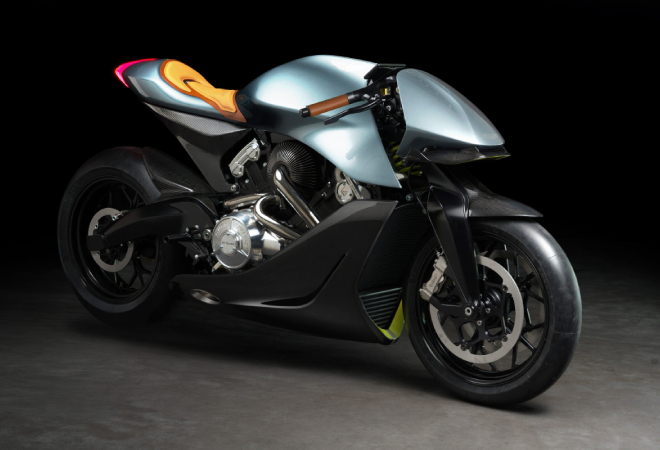
Aston Martin and Brough Superior built a track bike that never tried to be versatile. Carbon fiber, dense aerodynamics, and more than 220 horsepower make it a machine for which everyday practicality does not apply.
The AMB 001 Pro looks less like transport and more like a proof of how tightly form can wrap around speed.
Yamaha Niken GT
At first the front end looks assembled wrong.
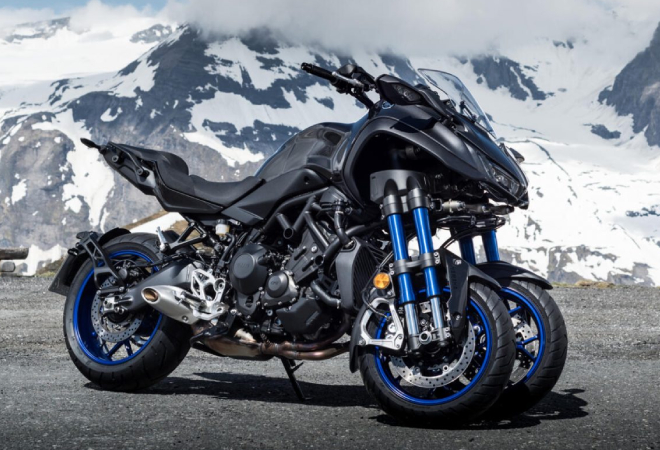
Then it becomes clear that this is the design. Two leaning front wheels work in sync and behave predictably, while still breaking the usual idea of what a motorcycle looks like.
Niken is a rare case where a strange engineering idea reached series production and did not stay a niche experiment.
Arch KRGT-1
The KRGT-1 sits on the line between custom and production bike and does not hide it.
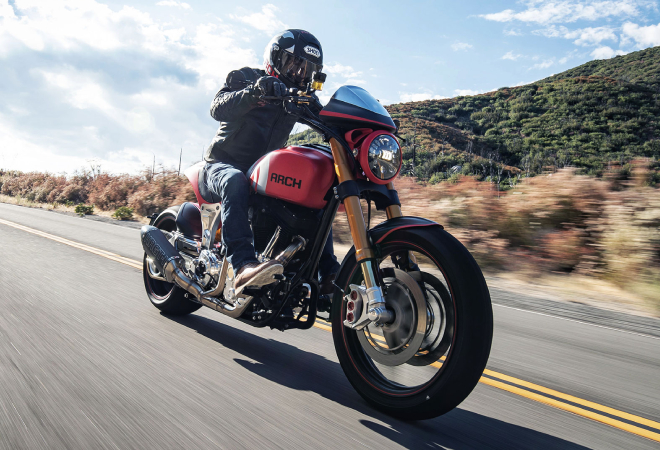
Each bike is built by hand and fitted to the owner. At its core are a large V-twin and a heavy aluminum structure that feels more like a personal project than a conveyor product.
The KRGT-1 was not made for records or tech demos. Its value is the sense of a machine built for one person, not for mass-market specs.
Ducati Diavel V4
The Diavel has always stood apart from the rest of Ducati's range.
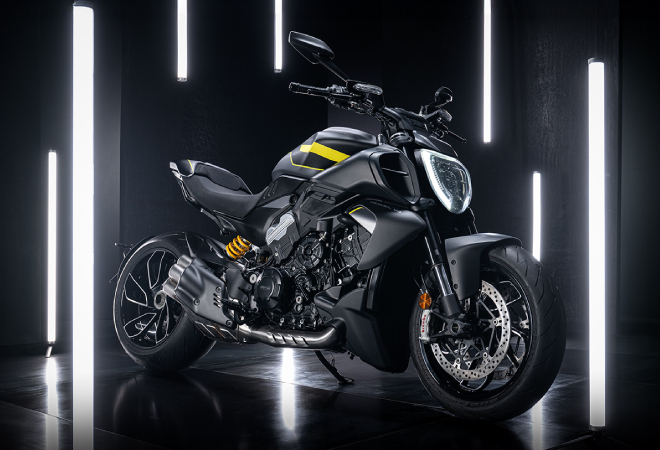
On one side: a low seat and a massive silhouette. On the other: a V4 and dynamics closer to sport bikes. Those two worlds usually do not meet; here they exist at once.
About three seconds to 100 km/h is only a number. More interesting is how calmly it joins things that usually conflict.
These bikes share no class, country, or school of engineering. They share one choice: leave the usual template and see what happens next.
Some became series machines. Some stayed rare. In every case the result is the same: for a moment, the familiar idea of a motorcycle stops working.