Bentley has unveiled its first fully electric SUV, the Torcal, and in photos it looks like a self-contained model: a new body, a new design language, a lavish cabin, and an 821 hp powertrain. Park it next to the Porsche Cayenne Electric, though, and a curious detail emerges. Under the British sheet metal sits far more familiar hardware than you might expect. The kinship is obvious not only to engineers, but to anyone who simply stands the two cars side by side.
A new Bentley without a gasoline engine
Torcal is Bentley’s first production electric car. It is slightly shorter than the Bentayga: 5008 mm long, 2198 mm wide with mirrors, 1677 mm tall, on a 3023 mm wheelbase. Curb weight is substantial even for a large electric SUV — 2795 kg.
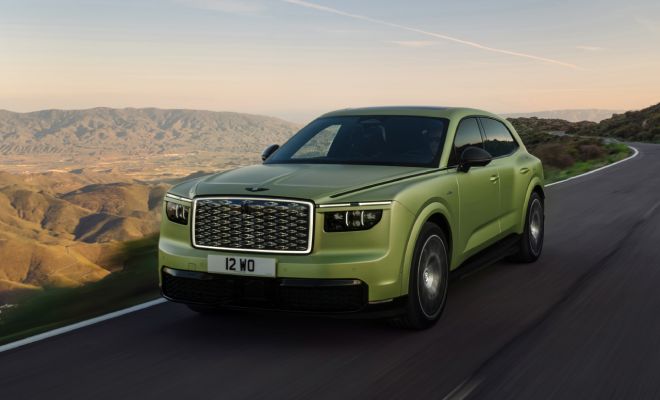
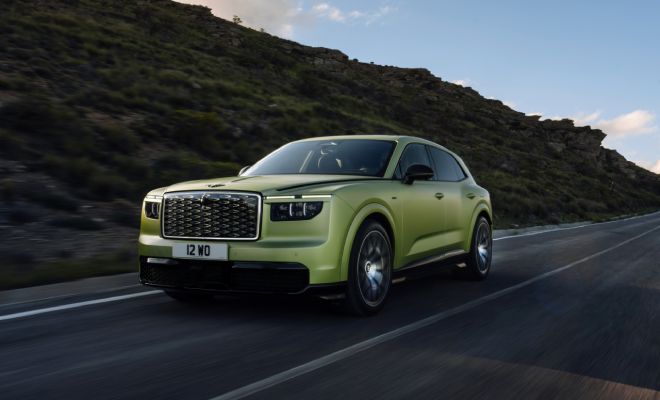
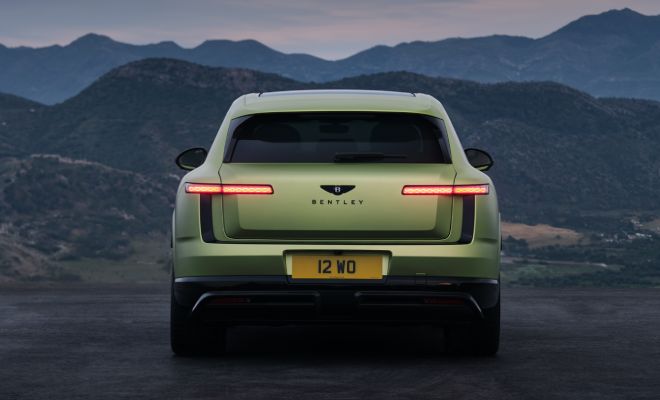
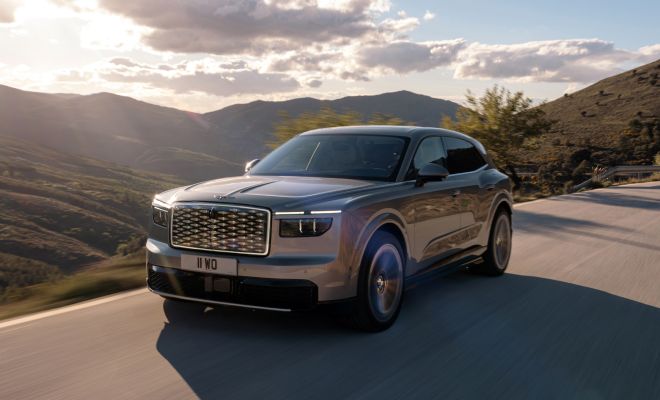
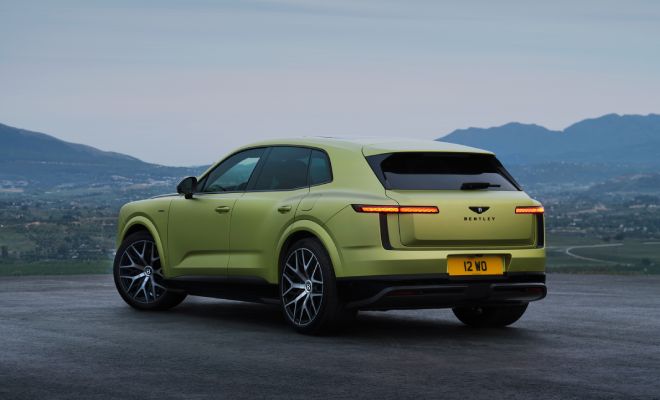
The exterior really is new. Bentley calls Torcal the first model in a leaner, more minimalist design direction for the brand. Up front, the familiar massive grille gives way to a Floating Diamond Grille with 76 individual elements that light up when you unlock the car. At the rear, a black “horseshoe” stretches the body width, while the tailgate shape nods to the luggage rack on the historic Bentley Blue Train.
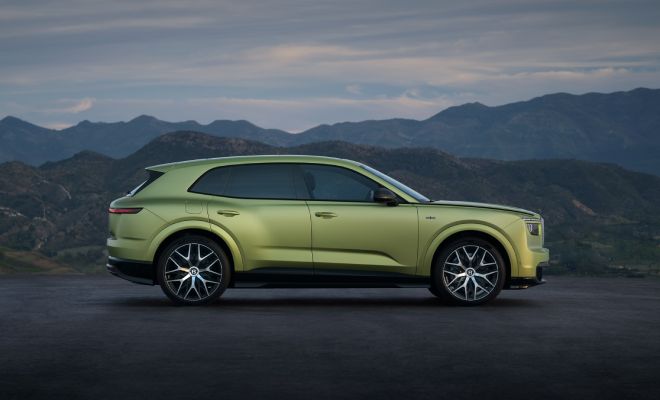
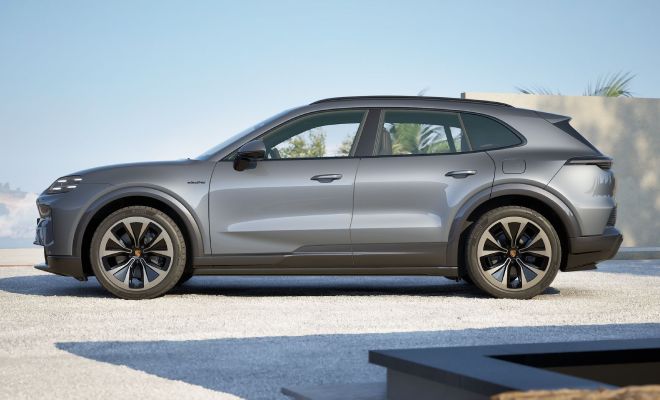
In profile the car looks more familiar. A long wheelbase, short overhangs, a low roof, and a stretched sport-SUV silhouette recall the Porsche Cayenne Electric. This is one of those cases where the resemblance has a concrete technical explanation.
How much Porsche Cayenne is in the Torcal
Both cars sit on the Volkswagen Group’s PPE architecture. They share a 3023 mm wheelbase, an 800-volt electrical system, and a battery of about 113 kWh. Torcal carries a 113.2 kWh pack, two electric motors drive all four wheels, and peak charging hits 400 kW. Bentley claims 10–80% in 16 minutes.
The kinship shows in the chassis too. Torcal gets Bentley Active Ride with a dedicated electro-hydraulic pump for each damper. The system tunes each corner and helps control body roll. There is all-wheel drive and four-wheel steering: at low speed the rear wheels turn opposite the fronts, cutting the turning circle to 11 meters.
And the cabin is the most interesting part. Torcal’s dash mounts a vertically curved 12.25-inch OLED screen. Ars Technica notes that Bentley uses the same curved OLED as the electric Cayenne. The dash layout is very similar too: a large screen dominates the center stack and visually continues toward the center console.
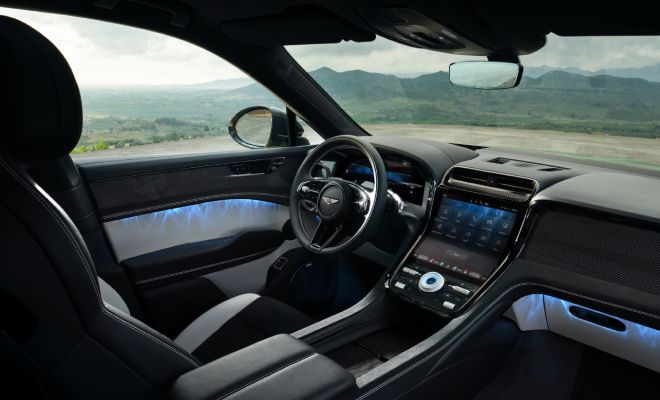
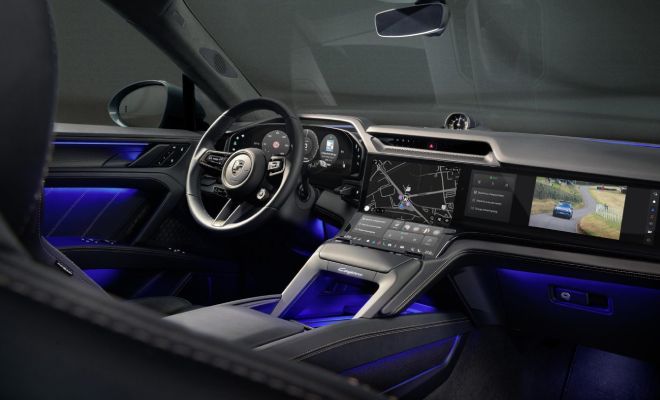
Bentley still adds its own pieces. Controls differ, Bullseye Vector Sphere vents are brand-specific, and the trim and materials are unique. There is no passenger display, and the cabin overall feels more traditional than many modern EVs.
Even some convenience features share a Porsche lineage. Torcal can get power doors that open by button, from the screen, or via the My Bentley app.
This is where Torcal gets more interesting than another Bentley launch. Shared platforms surprise no one anymore, but when wheelbase, battery, 800-volt architecture, charging hardware, the broad logic of active suspension, and even the curved OLED line up, the car’s origins are hard to miss. You can see it before lifting a hood: park Torcal next to a Cayenne Electric and the body proportions and cabin architecture read immediately.
Calling Torcal a simple “rebadged Cayenne” would still be wrong. Bentley did not copy the whole car. Torcal has its own body, different powertrain calibration, its own suspension and steering tune, a different interior, and a wholly different finish level. Even the PPE platform allows different components and setups.
The result is a familiar modern-industry compromise: an expensive car need not be designed from a blank sheet. What matters is what the maker does with the shared hardware. Bentley took a ready Volkswagen Group EV architecture and spent its own effort on body, cabin, chassis tune, acoustics, and how the car feels.
821 hp and 600 km of range
In base form Torcal’s two motors make 821 hp and 1155 N·m. It hits 100 km/h in 3.4 seconds and tops out at 250 km/h. WLTP range is quoted at 600 km.
On a 350 kW charger Bentley says it can add more than 357 km of range in 10 minutes. A 10 to 80% charge takes 16 minutes, per the maker. Final European energy use and CO₂ figures still await certification.
There is also a Torcal S: 888 hp and 1350 N·m, 0–100 km/h in 2.9 seconds, and 260 km/h. Bentley calls it the most powerful production car in its history.
Bentley is betting on more than speed
At nearly 2.8 tonnes, Torcal is unlikely to prove its worth on acceleration alone. Bentley’s main pitch is comfort.
Front seats offer 16 electric adjustments, heating, ventilation, and massage. Cabin options include leather, wood, and Merino wool cloth. Dynamic Waterfall Lighting uses more than 450 LEDs, and the Naim for Bentley audio system packs 28 speakers at 1780 W with Dolby Atmos.
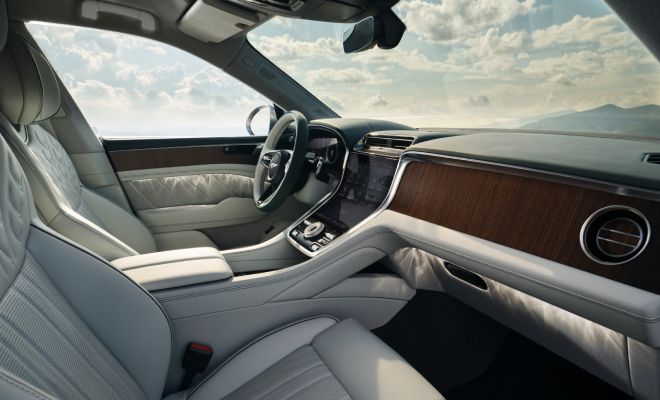
More interesting still: Bentley tried to keep an EV that still feels like a Bentley. Torcal has several drive modes that change both vehicle settings and cabin ambience. Sound design can even mimic a big engine if the owner misses that character.
In the end Torcal is a telling product of the conglomerate era. Outside it is a new Bentley; inside it is a car with expensive materials and its own tuning; underneath sits EV architecture you already find at Porsche.
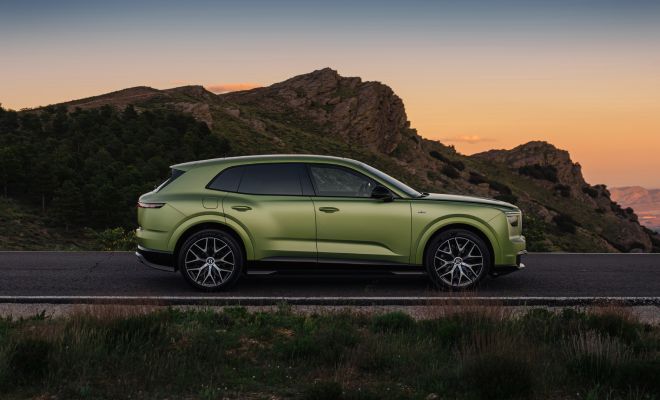
And that may be what makes Bentley’s first EV more interesting than another ultra-powerful SUV. Torcal shows how the idea of automotive individuality is changing: a brand no longer needs to design every part itself. What matters more is how convincingly it can rework a shared tech base and give it its own character.
Specs
Dimensions, L/W/H, mm: 5008 / 2198 / 1677
Curb weight, kg: 2795
Powertrain: 2 electric motors
Power, hp: 821
0–100 km/h, sec: 3.4
Drive: All-wheel drive, AWD