Today's biggest cruise liner already feels like a small city, with restaurants, shops, theaters, and thousands of passengers. At the end of the 20th century, though, a project appeared that makes even modern giants look modest. Engineers wanted a ship longer than a kilometer where as many as 100,000 people could live permanently. It was meant to be more than a travel vessel: a true floating city that would roam the oceans for years.
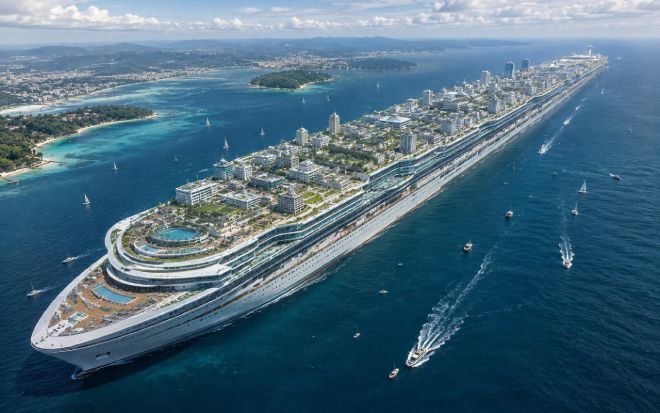
The project was called Freedom Ship. It was unveiled in the 1990s as an attempt to invent a new way of living: people would not simply book a voyage, they would buy apartments on board and stay there full time.
That set Freedom Ship apart from ordinary cruise ships. The creators planned to sell residences, offices, and commercial space before construction even began. In their vision, you could own a home on a ship that moved between continents, surrounded by a fully working infrastructure.
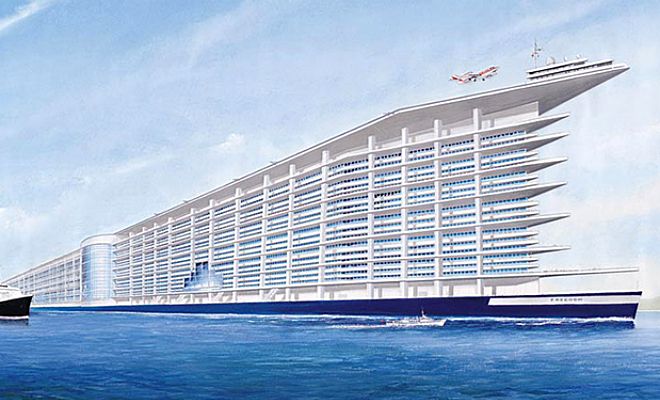
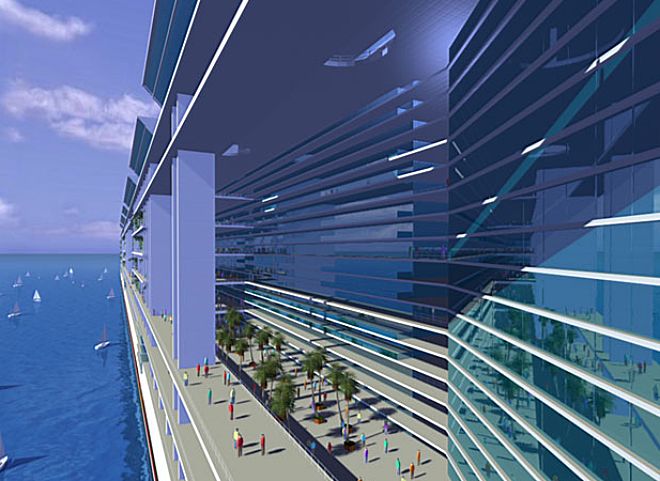
The plans called for about 17,000 living units, office towers, shops, restaurants, schools, medical centers, and recreation areas. Running a city that size demanded a huge workforce: crew and staff alone could number around 20,000 people.
Freedom Ship's dimensions looked almost fantastical. Length was set at about 1.3 kilometers. By comparison, the largest modern cruise liners measure around 365 meters. The result would have been an object nearly four times longer than today's ocean giants.
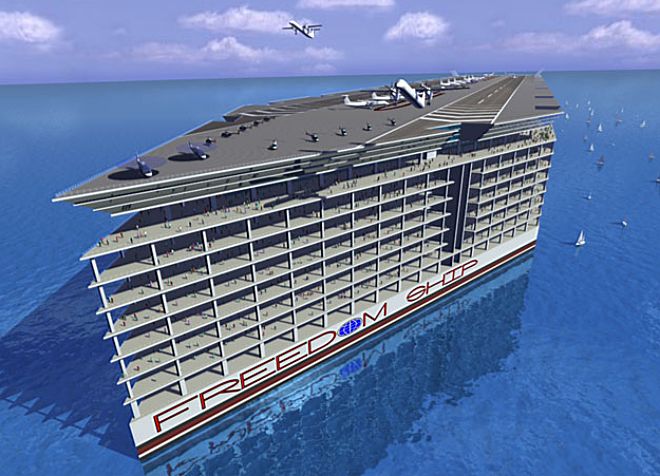
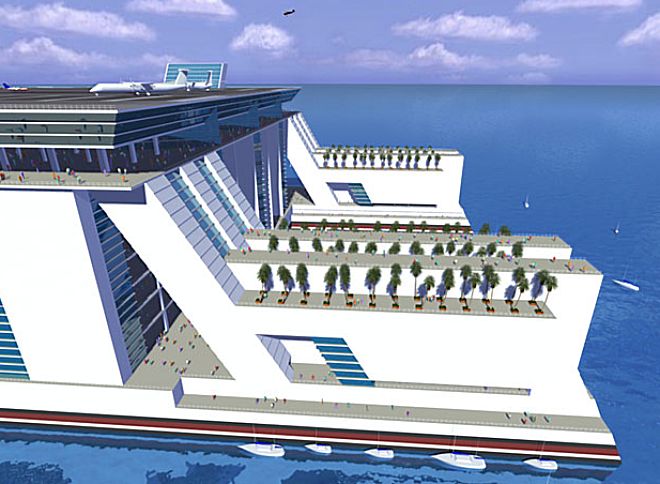
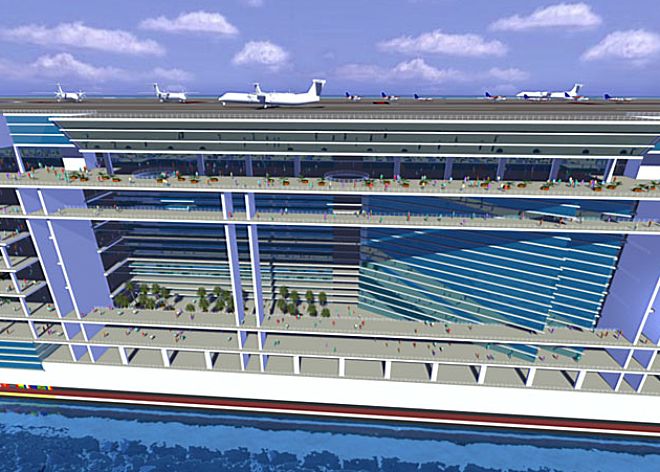
According to the creators' estimates, up to 100,000 residents and guests could be on board at once. Upper decks were to hold parks and even a runway for small aircraft. Inside the ship, a private transit system would link residential and business districts.
Projected displacement was roughly 2.7 million tons. That would have placed Freedom Ship among the largest artificial structures ever built. That very scale became the main obstacle.
In the early 2000s, construction costs were estimated at about $11 billion. And the challenge was not only the enormous hull. An entire city had to run autonomously: power generation, water treatment, waste disposal, security, and supply.
There were also questions with no ready answers. Which laws govern a city that stays in international waters? Who is responsible for its residents? How do you protect a structure longer than a kilometer in severe storms?
After the 2008 financial crisis, raising the required investment grew even harder. Despite interest in the project and many presentations, Freedom Ship never moved into construction.
In the end, the largest liner in history stayed on the drawings. Engineers could imagine a 1.3 kilometer hull, but the real difficulty was not the ship itself. It was far harder to invent a place where tens of thousands of people could live permanently in the middle of the ocean.
Freedom Ship became one of the strangest chapters in shipbuilding history: an attempt to build not merely a vessel, but a new kind of city with no fixed tie to land.